God's response to your suffering isn't to remove it — it's to step into it with you and then send you to comfort others. 2 Corinthians 1:3-7 reveals why.
2 Corinthians 1:3-7 — Why God Comforts You Through Pain, Not From It
If you could choose between fixing someone's suffering and simply joining them in it, you'd fix it every time. So would I. So why doesn't God? Why does the One who has all power to eliminate pain instead choose to step into it — to sit with us in the wreckage rather than clear it away? That question sits at the center of 2 Corinthians 1:3-7, and the answer Paul gives is not the one we want to hear. But it might be the one that saves us.
The standard Christian line on suffering goes something like this: God allows hard things so we'll grow. True enough, as far as it goes. But Paul is saying something far more radical. He's saying that your suffering has an audience — that the comfort God pours into your broken life is not the end of the pipeline. It's the beginning. You are being comforted so that you can comfort others. Your pain has a destination beyond you.
The Man Who Wrote These Words Was Bleeding When He Wrote Them
It matters enormously who is speaking in 2 Corinthians 1. This is not a tenured professor of theology offering tidy observations about hardship from behind a mahogany desk. This is Paul — a man whose ministry résumé reads like a trauma report.
Consider what he catalogs in 2 Corinthians 11:23-28: five times receiving thirty-nine lashes from the Jews, three beatings with rods, one stoning, three shipwrecks, a night and a day adrift in open sea, constant danger from rivers, robbers, his own countrymen, Gentiles, cities, wilderness, ocean, and false brothers. Sleepless nights. Hunger. Cold. Exposure. And then, as if all of that weren't enough, he adds this devastating line: "Apart from these other things, there is the daily pressure on me of my anxiety for all the churches" (watch at 7:25).
But the physical suffering isn't even the deepest wound. The letter of 2 Corinthians exists because this church — Paul's church, the one he birthed and bled for — is debating whether he's even a real apostle. They want credentials. Letters of recommendation. As Pastor Martin Barnard put it, "This is deep betrayal and a sense that the people that should have stood by him have turned their back on him" (hear this moment). Paul is writing about comfort from the God of all comfort while his heart is being shredded by the very people he's writing to.
That changes how you read verse 3. "Blessed be God, even the Father of our Lord Jesus Christ, the Father of mercies, and the God of all comfort." This is not a greeting card sentiment. It's a man clinging to the character of God while everything around him falls apart.
And from the very start, suffering was baked into Paul's calling. In Acts 9:16, God tells Ananias the recruitment pitch for Saul of Tarsus: "I will show him how much he must suffer for the sake of my name." Imagine that altar call. Come to Jesus — so you can suffer.
God Doesn't Watch Your Pain from a Distance
Suffering is isolating. Nothing makes you feel more alone than the suspicion that nobody around you truly understands what you're going through. You reach out for comfort and come back frustrated, because the words people offer feel thin and secondhand.
But Scripture reveals a God who does not observe human suffering from a safe distance. He sees it. He hears it. He knows it. And the Bible proves this by tracing the pattern across centuries.
In Exodus 2:24-25, the Israelites are enslaved, their baby boys thrown into the Nile. And the text says God heard their groaning, remembered his covenant, saw the people of Israel, "and God knew." The King James renders it "God had respect unto them." He didn't glance. He knew (watch at 16:29).
In 1 Samuel 1:19, Hannah is barren and broken, and the text says simply: "the Lord remembered her."
In Job 19:23-24, Job — the man whose name is synonymous with suffering — cries out from the ash heap while his friends pile on: "Oh, that my words were written! Oh, that they were inscribed in a book! Oh, that with an iron pen and lead they were engraved in the rock forever!" And here's the beautiful thing: we're reading them. Job's prayer was answered. God heard. He remembered. He made sure the story survived.
But seeing and hearing are not enough. A father on the phone with a son in a war zone can say "I love you" over and over, and the words are true, and they still feel impossibly far away. Talk can feel cheap when the bombs are falling.
That's why God didn't stay on the other end of the phone. He came. Hebrews 2:9-10 tells us that Jesus was "made lower than the angels" and was made "perfect through suffering." The word "perfect" here doesn't mean Jesus was morally deficient. It means that to be the complete Savior we needed — to be everything a Redeemer must be — he had to walk through the fire himself. He tasted death. He was tempted as we are. He stepped into the story.
The Question Helen Roseveare Got Wrong for Twenty Years
The most arresting moment of the evening came through the story of Helen Roseveare, a British missionary surgeon who served in Congo from 1953 to 1964. She had built a hospital, an orphanage, a missionary compound — eleven years of selfless labor poured into a people she loved.
Then the Simba uprising swept through. Rebels fueled by rage against European colonizers destroyed everything she had built. They beat her. They violated her. They tied her to a tree. And then they brought out the one thing she had left — the handwritten manuscript of a book documenting everything God had done through their mission over eleven years — and burned it in front of her.
Through clenched teeth, she whispered the question she had shaped her entire life around: Is it worth it?
And in that moment, the Holy Spirit settled over that nightmare scene and spoke: "Helen, my daughter, you've been asking the wrong question all your life. The question is not, is it worth it? The question is, am I worthy?" (watch at 55:14)
That distinction will rearrange your theology of suffering if you let it. "Is it worth it" puts you at the center — your sacrifice, your cost, your ledger of gains and losses. "Am I worthy" puts Jesus at the center. And Roseveare, through tears, answered: "Oh, Jesus, it is worth it — because you're worthy."
She later recounted the moment during her capture when she was dragged down the hallway of her own home, beyond the capacity to pray: "Suddenly, there was God. I didn't see a vision. I didn't hear a voice. I just knew with every ounce of my being that God was actually vitally there." And what he said to her cuts to the bone: "These are not your sufferings. They're not beating you. These are my sufferings. All I ask of you is the loan of your body" (hear this moment).
One word became unbelievably clear to her: privilege.
Your Comfort Has a Destination Beyond You
Here is where Paul's argument in 2 Corinthians 1 takes its sharpest turn. He doesn't say God comforts us in all our affliction — period, full stop, end of sentence. He says God comforts us in all our affliction so that we may be able to comfort those who are in any affliction, with the comfort with which we ourselves are comforted by God.
Your suffering has an audience. Your comfort has a destination. The pipeline doesn't terminate with you.
The Greek word Paul uses for "comfort" here — parakaleo — appears about thirty times in the New Testament, and a full third of those occurrences are packed into this small passage. It's related to parakletos, the word Jesus uses for the Holy Spirit in John 14: "I will not leave you comfortless." The picture is someone who comes alongside, puts an arm around you, and says: I'm here. I'm in this with you.
That's what God does for you. And that's what he's asking you to do for the people around you.
This means noticing. There are people you pass every day whose lives are shattered, and they're waiting for someone to see them. It means listening — not the "how are you / fine" exchange that costs nothing, but the kind of listening Jesus practiced with the woman at the well in John 4, or with the woman healed of her bleeding who had no need to tell her story but was invited to tell it anyway. Jesus stopped a crowd, delayed an urgent appointment with Jairus' dying daughter, and said: Somebody touched me. I want to hear their story.
And it means stepping in. Not fixing from a distance. Not offering advice from behind your walls. Getting into the mess. As Pastor Martin Barnard said plainly: "Stepping into their lives and stepping into other people's lives is messy. But if God can help us with the spirit of Christ and the compassion that he showed, if God can help us to begin to care enough, to be really authentic, to begin to practice some transparency, some honesty, some openness till people can see that we wanna be part of their life" (watch at 46:08).
In a single congregation, hundreds and hundreds of lives intersect with people no pastor will ever meet. But you meet them. You work beside them. You live next door to them. God is asking you to carry the comfort he's given you and pour it into their story.
Psalm 119:71 says it with devastating simplicity: "It was good for me that I was afflicted, that I might learn your statutes." Philippians 3:10 says Paul's deepest prayer was to know Christ and "the fellowship of his sufferings." Psalm 107 traces the pattern again and again — people wander from God, God sends trouble, they cry out, he delivers, and the refrain thunders: "Oh, that men would praise the Lord for his goodness!"
Suffering is not a possibility in this life. It is inevitable. The only question is what you do with it. Will you carry it to the feet of Christ, where he infuses it with meaning and purpose? Or will you hold it close, let it turn you inward, and watch it become the meaningless thing you always feared it was?
Romans 8 answers the question Paul has been building toward: "I reckon that the sufferings of this present time are not worthy to be compared with the glory which shall be revealed in us." When you share in the sufferings of Christ, you share in his future glory. That's not a consolation prize. That's the whole point.
What to Remember
- God's response to your suffering is not to remove it but to enter it — Jesus was made perfect through suffering so he could stand beside you in yours.
- Your comfort has a destination beyond you. God comforts you so that you become a channel of that same comfort to others who are breaking.
- The right question in suffering is not "Is it worth it?" but "Is He worthy?" — one puts your cost at the center; the other puts Christ there.
- Suffering that isn't given to Christ turns you inward and makes you a victim. Suffering surrendered to Christ turns you outward and makes you a minister.
- Noticing, listening, and stepping into someone's pain is the practical shape of the comfort Paul describes — and it will cost you your comfort.
- If you don't know God, your suffering has no ultimate meaning — not because it doesn't matter, but because apart from him, nothing does. That's not cruelty. That's an invitation.
Questions to Sit With
- What suffering in your life have you been holding close to yourself rather than laying at the feet of Christ — and what would it look like to actually let go of it?
- Is there someone in your daily life whose pain you've been stepping around instead of stepping into? What's stopping you?
- When you hear "Is He worthy?" instead of "Is it worth it?" — does that comfort you or terrify you? Why?
- Have you ever treated Christianity like a promise of a good life rather than a call to take up a cross? What happened when suffering arrived anyway?
- Who has God already comforted you through — and who is he now sending you to comfort?
Scripture Referenced
- 2 Corinthians 1:3-7 — Primary passage
- Acts 9:13-16
- 2 Corinthians 6:4-10
- 2 Corinthians 11:23-28
- 2 Corinthians 3:1-2
- Exodus 2:24-25
- 1 Samuel 1:19
- Job 19:23-24
- 1 Peter 4:19
- Hebrews 2:9-10
- Psalm 119:71
- Philippians 3:10
- Psalm 107
- Romans 8
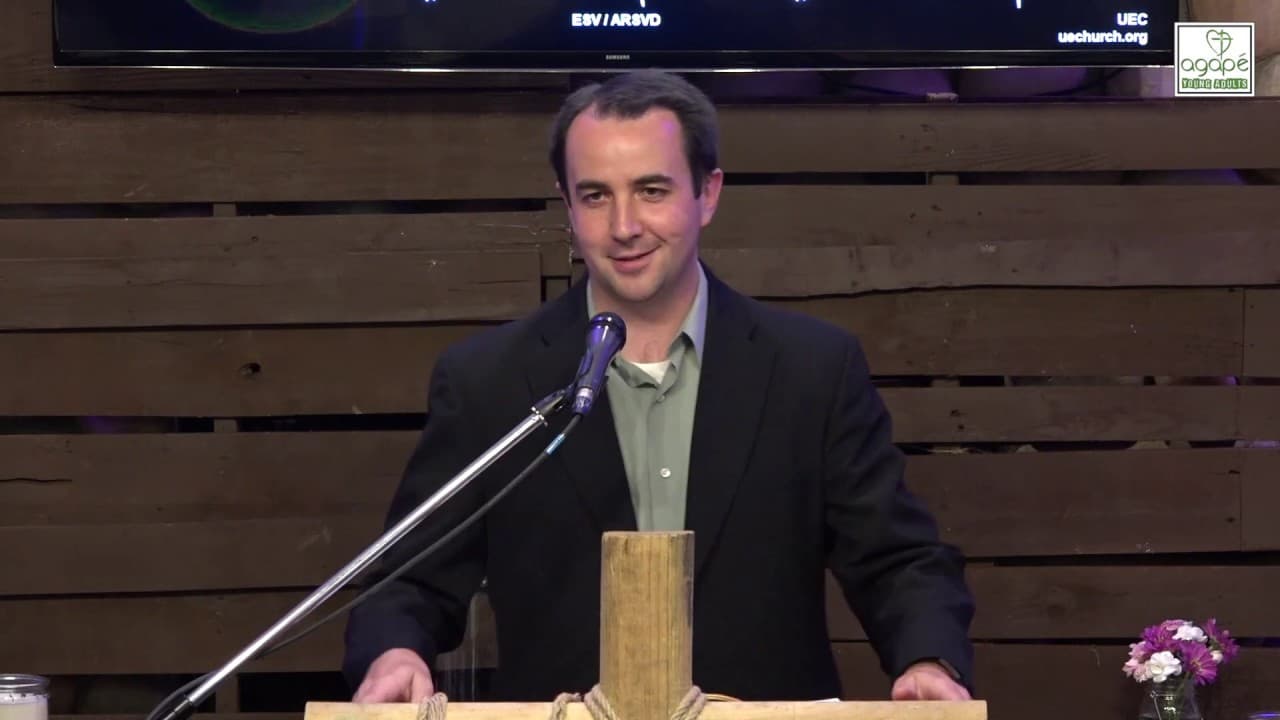
This article is drawn from the sermon "The Purpose of Suffering - Pastor Martin Barnard" by Pastor Martin Barnard at Maranatha Bible Church Chicago. Watch the full sermon →
Related Articles

Nehemiah 6:15-19 — What 52 Days of Rebuilding Teaches About Prayer and Fruitfulness
Pastor Daniel Batarseh · September 11, 2026
Nehemiah 6:15-19 — What 52 Days of Rebuilding Teach Us About Prayer and Persistence
Pastor Daniel Batarseh · September 11, 2026

Is the Millennium in Revelation 20 Literal? 5 Reasons
Pastor Daniel Batarseh · September 6, 2026