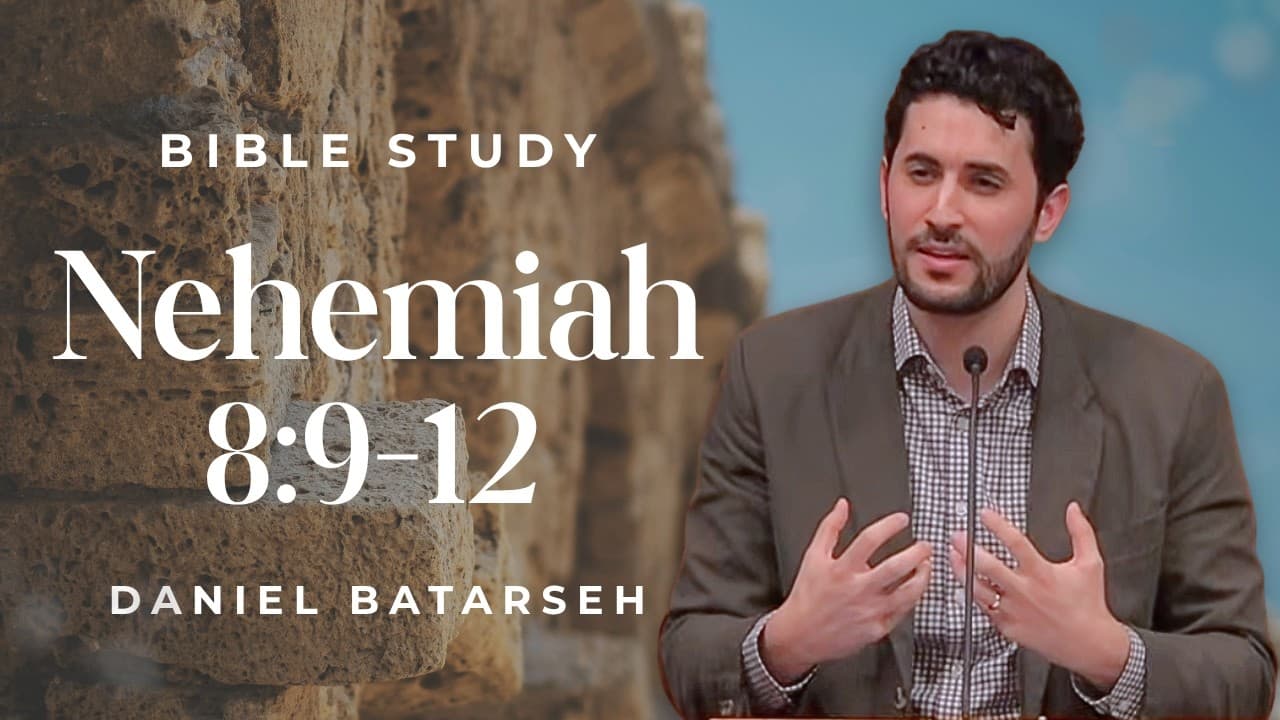
God told a weeping nation to stop crying and start feasting. Nehemiah 8:9-12 reveals that Scripture doesn't just inform your mind — it governs your emotions.
The people of Israel had just heard God's law read aloud for the first time in a generation. They understood it. And they wept — not politely, not quietly, but with the kind of raw grief that comes when you suddenly see the distance between who God called you to be and who you actually are. And right into the middle of that holy sorrow, Nehemiah said something that should stop every one of us in our tracks: Stop crying. This day is holy. Eat the best food. Drink the best wine. Send portions to those who have nothing.
Can God actually command what you feel? Nehemiah 8:9-12 answers with an emphatic yes — and understanding why changes everything about how you relate to Scripture, to your emotions, and to the God who gave you both.
You Are Not a Slave to Your Feelings
Here is the tension that makes this passage so electric: the people's grief was legitimate. They weren't manufacturing tears. They had just heard the law of God — likely large portions of Deuteronomy — and the weight of their national disobedience crushed them. This was real conviction, the kind we pray for in our churches. And yet the leaders told them to stop.
Three times in four verses, the command rings out. Verse 9: Do not mourn or weep. Verse 10: Do not be grieved. Verse 11: Do not be grieved. Each time, the reason is identical: This day is holy to the Lord.
Now, if you've ever told yourself — or been told — "I'm just an emotional person; I can't help it," this passage has something to say to you. Not harshly. But honestly.
As Pastor Daniel Batarseh put it: "We do not have to become slaves to our feelings, and that is really good news. The scriptures are so authoritative, the Bible is so persuasive that when it is rightly believed, rightly applied, rightly understood, it can actually put a harness on the way we feel" (watch at 9:39).
Notice what this does not mean. It does not mean your emotions are fake. It does not mean maturity equals suppression. The people's tears were an appropriate response to conviction — the first fruit of the Word doing its work. But maturity means your feelings answer to truth, not the other way around. The grief was real, but God had already spoken about this day. It was a feast day. It was holy. And holiness, in this case, demanded celebration, not mourning.
This is the principle operating beneath the surface: what you feel is considerably shaped by what you think and believe. Distance yourself from Scripture and you will find yourself increasingly governed by whatever emotion happens to blow through you on a given Tuesday. Draw close to God through His Word, and something remarkable begins to happen — a progressive sanctification of your emotional life where you grieve the right things and rejoice over the right things, in the right measure, at the right time.
Think about how many commands in Scripture address feelings directly. "Do not be anxious about anything" (Philippians 4:6). "Rejoice in the Lord always" (Philippians 4:4). "Fear not" — repeated hundreds of times. Even in Matthew 10, Jesus tells His disciples not to fear those who can kill the body but cannot destroy the soul. These are not suggestions. They are commands. And if God commands them, He must believe we can obey them — not by sheer willpower, but through the renewing of our minds in His Word (hear this moment).
The honest objection arises: Aren't feelings spontaneous? Aren't they involuntary? To some extent, yes. No one is claiming you'll never be surprised by a surge of fear or sadness. But the pattern of your emotional life — the currents that run deepest — those are shaped by what you rehearse in your mind, what you believe about God, and how saturated you are in His truth. The people in Nehemiah 8 had to choose not to let their grief dictate how they worshiped God on a day He had already prescribed for feasting. And remarkably, they listened.
Feasting Is Not Optional — It's Obedience
We tend to think of obedience in terms of sacrifice, discipline, self-denial. And rightly so — much of the Christian life involves dying to self. But here, obedience looked like eating the best food and drinking the sweetest wine.
Nehemiah's instructions in verse 10 are striking: "Go your way, eat the fat and drink sweet wine." This was not indulgence for its own sake. This was covenant celebration. In the Old Testament feasts — and this was the Feast of Trumpets — the worshipers were invited to partake of the very food they were offering to God. It was a shared meal between the people and the Lord Himself. As 1 Samuel chapter 1 illustrates, these feasts called the worshipers to actually taste and delight and be refreshed in God's presence.
God wanted His people to know that holiness is not grim. Sacred days are not somber days — at least, not always. Sometimes the holiest thing you can do is feast. Sometimes the most spiritual act available to you is to enjoy what God has provided with a full and grateful heart.
But notice what Nehemiah adds: "and send portions to anyone who has nothing ready." This is where the text becomes deeply convicting. The celebration was never meant to be private. Joy in God that doesn't overflow toward others isn't the joy Nehemiah is describing.
And this wasn't just Nehemiah's personal compassion showing through. He grounds the instruction in the same phrase — this day is holy to our Lord — because the law itself, which Ezra had been reading aloud all morning, demanded exactly this. In Deuteronomy 15:7-8, God had already said: "If among you, one of your brothers should become poor... you shall not harden your heart or shut your hand against your poor brother, but you shall open your hand to him" (watch at 13:48).
Even more remarkable is the way God structured the feast calendar itself. In Leviticus 23:22, right between the instructions for the Feast of Weeks and the Feast of Trumpets, God slips in a command about leaving the edges of your harvest for the poor and the sojourner. It's sandwiched between worship instructions as if to say: You cannot worship Me rightly while ignoring the vulnerable person standing next to you. And in Deuteronomy 16, when the feasts are elaborated, God explicitly includes the fatherless, the widows, and the sojourners among those who should be present.
Virtually every time the feasts are mentioned in the Torah, care for the poor is woven into the fabric of the celebration. You cannot separate generosity from worship. The person who feasts lavishly while their neighbor goes hungry has missed the entire point of the feast.
"I Told Myself I Was Going to Pick Up Jesus"
All of this raises a question that cuts to the bone: Can you sustain this kind of obedience — feasting, giving, serving — if you're not doing it with joy?
Deuteronomy 28:47 gives a devastating answer. As God was preparing Israel to enter the Promised Land, He already knew they would fail. He predicted their departure. And when He named the reason, He didn't say, "Because you did not serve the Lord your God." He said, "Because you did not serve the Lord your God with joyfulness and gladness of heart, because of all the abundance of all things."
Read that again. The indictment was not that they stopped serving. It was that they stopped serving with joy. The duty continued. The delight died. And when the delight dies, the duty eventually follows.
"You can't survive in ministry if you're not doing it out of the place of joy. It's impossible. You can't endure if you're not doing it from the place of gladness in Christ. It will not work" (hear this moment).
This is where Pastor Daniel Batarseh shared a story about his father that landed like a thunderclap in the room. Years ago, when his father was new in the faith and had no formal ministry, he took it upon himself to drive a long distance to pick up a fellow believer and bring him to church. He barely had enough money for gas. He did it frequently. He did it faithfully. And when his son asked him what motivated him during those lean days, his father looked at him and said: "I told myself I was going to pick up Jesus" (watch at 25:03).
That changed everything. Not the circumstances — those stayed hard. Not the bank account — that stayed empty. But the vision changed. He wasn't running an errand. He was serving Christ personally. And that reframing — that including of the Lord in the act — turned a costly sacrifice into a joyful privilege.
This is what it means to serve the Lord with joy. It's not pasting a smile over resentment. It's seeing Christ in the act itself. It's making it personal. It's understanding that the God you serve actually brings delight to you when you know Him. And if you don't know that delight, the answer is not to try harder — it's to ask God to open your eyes. Help me see you. Help me hear you. Help me include you. Help me sense you. He is willing to do it.
The Stronghold You Didn't Know You Had
The final line of Nehemiah 8:10 is among the most quoted verses in all of Scripture, and among the least understood: "The joy of the Lord is your strength." Or more precisely, your stronghold.
A stronghold is a fortified place. A defensive position. It's where you retreat when the enemy is pressing in and the walls are crumbling and your own resources have run dry. And God says that stronghold — that unassailable refuge — is joy. Not grit. Not theological knowledge alone. Not discipline, as important as all those things are. Joy.
Joy in what? Joy in the Lord. Joy in His grace, His faithfulness, His covenant love, His presence. This is not the shallow happiness that evaporates when circumstances shift. This is the deep, Spirit-induced gladness that comes from knowing the God who commands feasts in the middle of conviction, who tells weeping people to eat the fat and drink the sweet wine because this day is holy.
And here is the sobering flip side: when that joy erodes — when you serve without gladness, when obedience becomes mere obligation, when the delight drains out and only the duty remains — you have lost your stronghold. You are defending your life with no walls. It's only a matter of time before something breaks through.
This is why Deuteronomy 28:47 is so terrifying. Israel didn't fall because they abandoned the rituals. They fell because they abandoned the joy. The forms continued. The heart departed. And eventually, so did they.
So guard your joy. Nurture it. Strengthen it. Protect it. Believe — actively, daily, stubbornly — that joy in God is greater than anything this world can offer. And when you can't feel it, go back to the Word that governs your emotions and let it do its work.
What to Remember
- God commands not just your actions but your emotions — and if He commands them, He provides the means to obey through His Word and Spirit.
- Spiritual maturity is not the suppression of feelings but their progressive sanctification — grieving the right things, rejoicing over the right things, in the right measure.
- Biblical feasting is an act of obedience, not indulgence — and it always includes generosity toward those who have nothing.
- Joyless service is unsustainable service. Deuteronomy 28:47 indicts Israel not for failing to serve God, but for failing to serve Him with gladness.
- The joy of the Lord is not a mood — it is a stronghold, a fortified refuge that holds you when everything else gives way.
- Including Christ personally in your acts of service — seeing Him in the person, the task, the cost — transforms duty into delight.
Questions to Sit With
- Where in your life have you been justifying your actions by saying "I can't help what I feel" — and what would it look like to let Scripture govern that area instead?
- Is there someone in your community who "has nothing ready" — someone you've been feasting past without sending a portion their way?
- If God evaluated your service not by its quantity but by its joy, what would He find?
- What would change in your most burdensome responsibility if you told yourself, like that father with the empty gas tank, "I'm going to pick up Jesus"?
- When was the last time you asked God — honestly, specifically — to help you see Him and sense Him in your daily life?
Scripture Referenced
- Nehemiah 8:9-12 (primary text)
- Deuteronomy 28:47
- Deuteronomy 15:7-8
- Leviticus 23:22
- Deuteronomy 16
- Matthew 10
- Philippians 4:4-6
- 1 Samuel 1
This summary was generated by AI from the sermon "Nehemiah 8 (Part 2) Bible Study (This Day Is Holy) | Pastor Daniel Batarseh (10/9/26)" preached by Pastor Daniel Batarseh at Maranatha Bible Church Chicago. Watch the full sermon →
Preached by
Pastor Daniel BatarsehSenior Pastor
This summary was generated by AI from the sermon transcript.
Based on the sermon