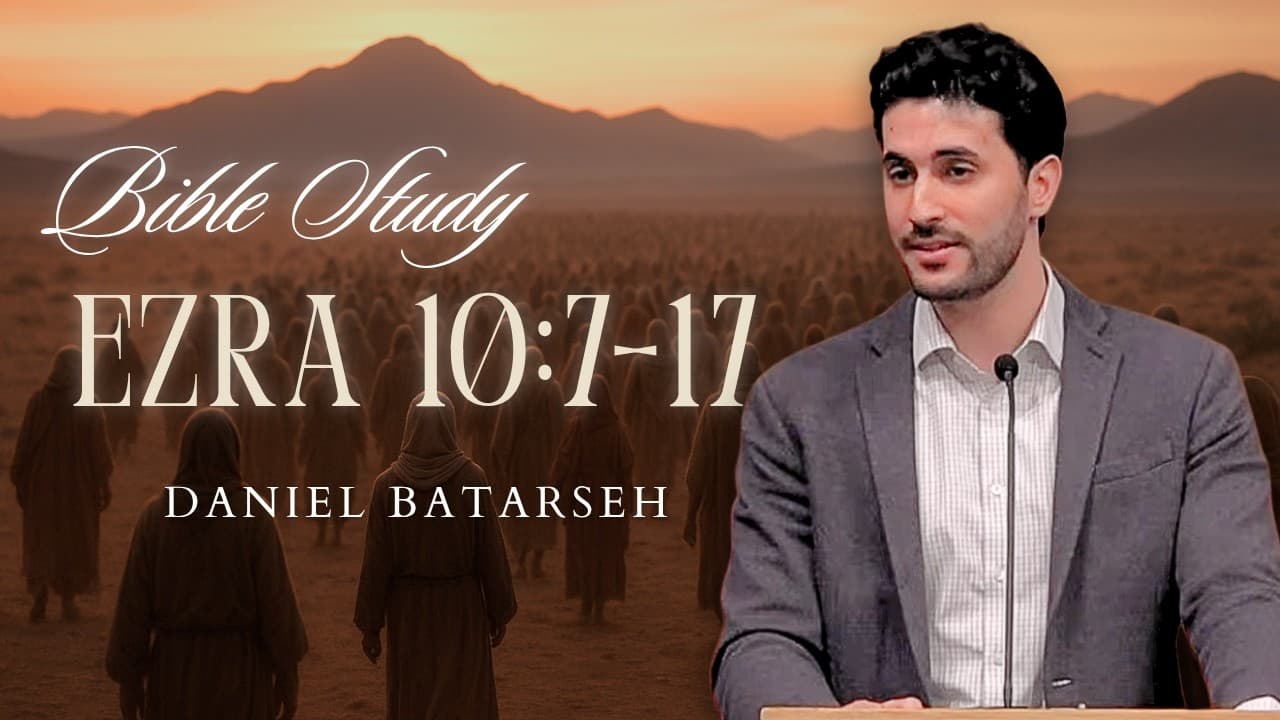
Ezra 10 doesn't just show us repentance — it exposes six truths about sin that most believers never consider, from what it steals to who it hurts beyond you.
You would expect the book of Ezra — a story of exiles returning home, a temple rising from rubble, a nation's identity reborn — to end with trumpets and celebration. It doesn't. It ends with a list of names. Not heroes. Offenders. A hundred and ten men who married foreign women and dragged an entire nation into a crisis that took three months to untangle.
But here is what most readers miss: the ending of Ezra is not a tragedy. It is a triumph. Because whenever sin is confronted and repented of — no matter how deep it has gone, no matter how many people it has entangled — that is victory. And buried in the details of Ezra 10:7–17 are six piercing truths about sin that can change the way you fight it, not after it has its grip on you, but before it ever gets a foothold.
One Hundred and Ten Out of Fifty Thousand — And It's Still a Crisis
Here is a number that should stop you cold. When you count the names listed in the second half of Ezra 10, roughly 110 men are found guilty of the sin of interfaith marriage. Now recall the census from Ezra 2:64–65: the first wave of returning exiles numbered about 42,360, plus over 7,000 servants. Close to 50,000 people. Ezra arrives eighty years later, so the population has certainly grown — perhaps to 80,000 or more.
So 110 out of tens of thousands. A fraction of a percent. Surely Ezra is overreacting? Surely his public weeping, his torn garments, his emergency assembly is a bit much for what amounts to a statistical rounding error?
Not according to Scripture. Ecclesiastes 9:18 delivers the verdict with surgical precision: "Wisdom is better than weapons of war, but one sinner destroys much good." Just one. As Pastor Daniel Batarseh put it: "In any community, in any setting, one sinner, if he is determined to sin, can wreak havoc. You know how many sinners Ezra is dealing with? At least a hundred and ten" (watch at 38:05).
This is the first truth about sin that most of us ignore: it must be confronted swiftly, while the roots are shallow and the numbers are small. Think of a stone teetering on the edge of a cliff. Right now, a child could stop it. But once gravity takes hold and momentum builds, nothing can. Ezra understood this. He did not form a committee. He did not schedule a meeting for next quarter. He acted the very next day.
What does this look like for you? It means taking captive that thought pattern of lust you've convinced yourself is harmless because it lives in your head and nobody can see it — apprehending it before it turns into flirtation, before words become action. It means bringing your outbursts of anger to the Lord early in your marriage, not after your spouse has been worn down beyond recognition. It means seeking accountability for your laziness now, before it becomes a burden on everyone who depends on you.
The principle is simple and terrifying: the longer sin is ignored, the greater it becomes in strength and influence. Confront it while your conscience is still tender. While the damage is still minimal. While you still can.
The Heavy Rain That Was Actually Mercy
Verse 9 paints a scene that broke my heart the first time I really saw it. The men of Judah and Benjamin assemble in the open square before the house of God. They are trembling. And it is pouring rain.
Throughout the Hebrew Scriptures, a summons to the house of God is an invitation to joy — to festivity, warm fellowship, singing, celebration. But these people come terrified. That is what sin does. It robs us of joy. Peace is replaced with paranoia. Blessing is substituted for burden. A confident conscience gives way to a tormented one.
And here is the insight that changes everything about temptation: "Sin in the form of temptation will never tell you what it's going to take from you. It will only tell you what it will give to you" (hear this moment). That is the lie every time. I'm going to gain satisfaction. Security. Confidence. Enjoyment. Temptation is a salesman who only shows you the brochure and hides the contract.
But now look at the rain itself. Most commentators treat it as a historical detail or a sign of God's displeasure. But there is another possibility hiding in Deuteronomy 11:13–14: "If you will indeed obey my commandments... he will give the rain for your land in its season." Under the old covenant, rain was a direct indicator of God's favor. Obedience brought rain. Disobedience brought bronze skies.
So here are these people, standing in their sin, being confronted for their disobedience — and it is raining. Heavy rain. You would expect God to withhold this blessing until after the repentance was complete, after they had proven themselves. But instead, when they make the initial move — when they simply show up, pushing through the storm to hear what God has to say — He meets them with mercy before the confession is even finished.
They could have used the weather as an excuse to delay. They didn't. And God honored that. The rain wasn't judgment. It was grace, pouring down on people who hadn't yet earned it. Because grace, by definition, is never earned.
This matters for you. If you have grievously offended God — if you have received His kindness again and again and responded with disobedience — the moment you choose to turn back, there is an open heaven. Not after you've cleaned yourself up. Not after you've figured out how to fix the mess. Now. While you're still soaked and trembling.
The Difference Between "We" and "You"
Ezra's approach to confrontation reveals something most modern leadership advice gets wrong. When he prayed in chapter 9, he was inclusive: "Our iniquities have risen higher than our heads, and our guilt has mounted up to the heavens" (Ezra 9:6). We. Our. Ours. But when he stood before the guilty assembly in chapter 10, the language shifted: "You have broken faith and married foreign women."
There is a common piece of advice given to preachers and leaders: always say "we," never say "you." And there is wisdom in that — humility demands it in most situations. But it is unbiblical to say you must always use inclusive language. Nathan did not look at David and say, "We are the man." He said, "You are the man." And that personalized blade cut deeper than any generality could.
The lesson here is not about harsh leadership. Ezra earned the right to say "you" because he first said "we." He demonstrated awareness of his own fallenness before pointing out anyone else's. But when the moment required direct accountability, he did not flinch. And this is exactly the kind of community that weakens sin's grip on our lives — people who love you enough to look you in the eye and say, "You're out of order here."
But Ezra's spiritual insight goes even deeper. Look at what he tells them in verse 11: "Separate yourselves from the peoples of the land and from the foreign wives." The main problem is the marriages. So why does he mention the peoples of the land first? Because Ezra is a brilliant spiritual surgeon. He knows the marriages are a symptom. The root was association with the wrong people. The companionship with unbelievers led to the most serious companionship on earth — marriage.
As 1 Corinthians 15:33 warns: "Bad company corrupts good morals." And if we are honest, some of the sins we cannot seem to gain victory over persist because of some of the people we will not let go of. The question is not just who is holding me accountable but who is influencing me? Who fills my social circles? Who do I look up to? Because who you walk with determines where you end up.
What Three Months of Cleanup Teaches About the Cost of Sin
The people responded beautifully. They agreed with Ezra's charge. They confessed. They were ready to act. But then came the honest, practical reality: "This is not a task for one day or for two, for we have greatly transgressed in this matter" (v. 13). They proposed a system — appointed times, local elders and judges examining each case individually. And remarkably, Ezra agreed. This man who acted with such urgency also had the humility to accept a better plan from the crowd.
The result? Verse 16 tells us they began on the first day of the tenth month and finished on the first day of the first month. Three months. Ninety days to untangle the wreckage of sin.
Consider what else could have been done with those ninety days. When Nehemiah rebuilt the walls of Jerusalem — a massive construction project — it took fifty-two days. Less than two months. But here, three months are consumed not building anything, not advancing anything, but simply cleaning up a mess that never should have been made.
"Sin is a greater thief than we actually think," the teaching pressed. "We heard earlier that sin robs us of our joy, but you know what I see here? Sin also steals our time" (watch at 1:04:59). Think about Miriam, the sister of Moses, whose gossip about Moses' wife resulted in leprosy and forced the entire camp of Israel to halt their journey through the wilderness until she was cleansed. One person's gossip. An entire nation delayed.
This is the truth about lasting consequences that we desperately want to avoid: confession may be immediate, reconciliation with God may be instant, but restoration takes time. Sometimes a long time. Repentance does not rewind the clock. It does not un-speak the words your children overheard. It does not un-send the message. It does not rebuild trust overnight. The fierce wrath they wanted turned away (v. 14) was real, and so was the slow, grinding process of making things right.
And notice one more painful detail. Verse 15 records that four men opposed the plan. Scholars debate whether they opposed the delay (wanting faster action) or opposed the separation itself (thinking it too harsh). But regardless of their motive, the very existence of opposition reveals something about sin we rarely consider: every sin carries the potential for collateral damage. It pulls in people who were never part of the original transgression. It creates friction where there should be unity. It forces an entire community to spend its energy on damage control instead of mission.
The One Thing That Will Always Bring You Back
The most revealing phrase in this entire passage comes from the people themselves in verse 14: "Until the fierce wrath of our God over this matter is turned away from us." Their primary motivation was not avoiding punishment. It was not saving face. It was restoring fellowship with God.
This is what separates godly sorrow from worldly sorrow. Worldly sorrow says, I got caught. I disappointed people. I ruined my reputation. Godly sorrow says, I have grieved the Holy Spirit. I cannot live knowing my sin has blocked my fellowship with God.
And this is not merely an Old Testament principle. 1 Peter 3:7 carries the same weight into the New Covenant: husbands are told to honor their wives "so that your prayers may not be hindered." The story that brought this home was unforgettable — a friend, weeks before his wedding, confessed he was nervous. Not about the usual things. "The way I treat my wife will determine how God hears my prayers, and I'm nervous about that" (watch at 11:33). That is a man who fears God. That is a man whose repentance, when it comes, will be real — because his relationship with God is the thing he cannot afford to lose.
Someone once commented on that verse in Peter: "Unfortunately, for some, prayer is of so little value that this warning doesn't mean much to them." That stings. But if you have tasted God's presence in prayer — if you have seen Him answer, felt Him near — then you tremble at the thought of anything blocking that access. And that trembling becomes the engine of your holiness.
What to Remember
- Sin must be confronted while the roots are shallow — the longer it is ignored, the more momentum it gains and the harder it becomes to stop.
- Temptation will always advertise what it gives you and hide what it takes — joy, peace, time, trust, and fellowship with God are all on the invoice.
- God meets imperfect repentance with immediate mercy — you do not have to clean yourself up before coming back; the rain falls the moment you turn around.
- The people who surround you will determine the direction of your life — the marriages in Ezra were the symptom; association with the wrong people was the root.
- Every private sin carries the potential for public collateral damage — it will involve people you never intended to hurt and create friction you never anticipated.
- A person who prizes their relationship with God above all else will always find their way back to repentance — that relationship is the strongest motive for holiness you will ever have.
Questions to Sit With
- Is there a sin in your life right now that you've minimized because it's "only in your head" or because "nobody else knows"? What would Ezra's urgency look like applied to that specific thing?
- Who are the five people you spend the most time with — and are they making sin weaker or stronger in your life?
- If the way you treated your spouse (or closest relationships) directly determined whether God listened to your prayers, what would you change tonight?
- Think about the last time you repented. Was your primary grief that you disappointed people — or that you grieved God? What's the difference, and why does it matter?
- What kingdom work is being delayed in your life because your energy is consumed cleaning up messes that sin created?
Scripture Referenced
- Ezra 10:7–17 (primary passage)
- Ezra 7:26
- Ezra 9:6
- Ezra 2:64–65
- Ecclesiastes 9:18
- Deuteronomy 11:13–14
- 1 Corinthians 15:33
- 1 Peter 3:7
- Isaiah 38:9
This summary was generated by AI from the sermon "Ezra 10 (Part 2) Bible Study (The People Confess Their Sin) | Pastor Daniel Batarseh" preached by Pastor Daniel Batarseh at Maranatha Bible Church Chicago. Watch the full sermon →
Preached by
Pastor Daniel BatarsehSenior Pastor
This summary was generated by AI from the sermon transcript.
Based on the sermon