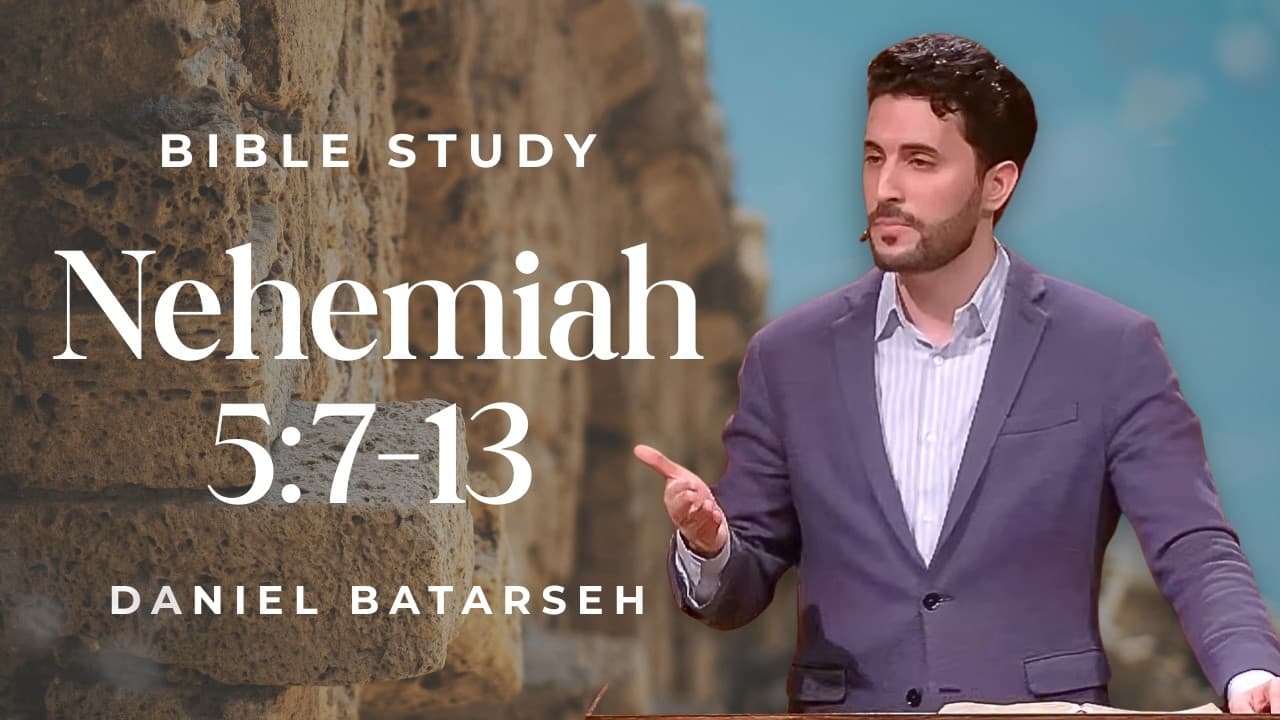
Nehemiah 5 reveals a devastating truth: the people couldn't praise God until sin was confronted and repentance was real. Here's why that matters for your worship today.
The people of Jerusalem couldn't worship. Not because they lacked musicians or liturgy, but because sin — tolerated, systemic, and perpetrated by their own leaders — had clogged the arteries of their praise. Nehemiah 5:6-13 records one of the most dramatic confrontations in the Old Testament: a governor standing before the wealthy elite of his own community, calling them to account for enslaving their brothers. And what happened when they repented? The text says it plainly: "All the assembly said amen and praised the Lord" (v. 13). The outcry became an anthem. The complaint became a chorus. This passage doesn't just teach us about ancient economics or political leadership. It exposes a pattern that runs through every church, every family, every human heart: unconfronted sin suffocates worship, and repentance — real, costly, urgent repentance — is the only thing that opens our mouths again.
Leaders Are Not Immune — And That's the Whole Problem
When Nehemiah investigated the outcry of the poor, the trail didn't lead to foreign oppressors or pagan neighbors. It led to the nobles and officials of Jerusalem — the respected ones, the influential ones, the men Nehemiah had likely worked alongside since arriving in the city. These were insiders. And they were the problem.
This is the first thing the text forces us to reckon with: Christians in positions of authority are not immune to falling into serious sin. The qualifications for an elder in 1 Timothy include not being a lover of money, and there's a reason for that. When someone who loves money holds authority over God's people, those people stop being sheep and start becoming opportunities for profit. As Pastor Daniel Batarseh put it bluntly: "People who love money and hold positions of authority don't see God's people as sheep. They see them as walking dollar signs" (watch at 32:01).
But here's where it gets uncomfortable. Nehemiah didn't look the other way because these men were powerful. He didn't arrange a quiet meeting to protect their reputations. He understood a principle that the modern church desperately needs to recover: when favoritism is tolerated in a congregation, holiness is compromised. James 2:1-9 addresses this same violation — the early church giving the best seats to the rich while overlooking the poor. It happened then. It happens now. One of the most popular churches in America, rocked by scandal in recent years, was revealed to have a designated VIP section for celebrities. The Bible anticipated this temptation thousands of years ago.
Nehemiah refused to play that game. Noble or poor farmer — everyone stood under the same standard. Everyone answered to the same God.
The Wisdom of Waiting Before You Speak
Verse 6 tells us Nehemiah was "very angry." Verse 7 tells us he "took counsel with myself." Between those two statements lies the entire difference between a fool and a wise leader.
Proverbs 29:11 says a fool gives full vent to his spirit, but a wise man quietly holds it back. Notice what the Bible calls foolish: speaking your mind in the moment, no matter how you feel. We live in a culture that celebrates this. "I just say what I think." "I keep it real." The Bible has a word for that: foolishness.
Nehemiah felt the right things. His anger was righteous. But he understood that having the right emotions and expressing them in the wrong way can undermine the very thing you're trying to redeem. So he waited. He thought. He prayed. He considered what to say, what to leave out, what to include, and when to say it. And when he finally spoke, his words landed with such force that the guilty "were silent and could not find a word to say" (v. 8).
This is the model. Righteous anger that matures into righteous action — not reactive outbursts that feel good for five minutes and destroy relationships for five years.
"You Don't Fear God" — The Root Diagnosis
When Nehemiah finally addresses the assembly, he doesn't lead with policy changes or financial restructuring. He goes straight to the root: "Ought you not to walk in the fear of our God to prevent the taunts of the nations, our enemies?" (v. 9).
This is the second reference to the fear of God in Nehemiah's book. The first appears in Nehemiah 1:11, where he describes those praying with him as people who "delight to fear your name." That phrase sounds paradoxical — delighting in fear — but it reveals something profound about what the fear of God actually produces.
According to verse 9, a person who fears God is deeply mindful of how their behavior affects their witness. They regularly ask themselves: Will this decision cause someone already hardened toward Christ to dig in deeper? Will this give the watching world ammunition to say, "See? They're no different than us"?
Nehemiah wasn't pulling this rebuke out of thin air. He was drawing from Leviticus 25:36, where God himself connects the dots: "Take no interest from him or profit, but fear your God, that your brother may live beside you." The antidote to financial exploitation — in Moses' day and in ours — is the fear of God. This was biblically informed rebuke, not spontaneous moralizing (watch at 58:26).
There was a small but striking illustration that brought this home. It involved something as mundane as paying a landscaper. The habit was simple: record every visit, so that when the bill came due, not a single week would be missed. When the landscaper arrived to collect and saw the meticulous records, his eyes widened. "You recorded every week I came by?" And the answer that came — unplanned, unrehearsed — was four words: "Because I fear God." Not because of a contract. Not because of a threat. Because God is watching whether we are honest in the small transactions, and that awareness governs everything (hear this moment).
That's what was missing in Jerusalem's nobles. And it's what's missing wherever Christians cheat, exploit, or cut corners and assume nobody's keeping track.
Nehemiah Could Confront Because Nehemiah Was Clean
Verse 10 is easy to misread. Nehemiah says, "Moreover, I and my brothers and my servants are lending them money and grain. Let us abandon this exacting of interest." Some interpreters see this as a confession — that Nehemiah himself had been caught up in the same compromise. But that reading collapses under the weight of the context. A man who was furious about this sin, who paused to pray and plan, who called a public assembly — only to admit he was guilty of the same thing? That's not leadership. That's hypocrisy.
What Nehemiah is actually saying is this: We lent money too. But we did it God's way. No interest. No exploitation. Follow our example.
This is why his words carried such authority. He could say "stop" because his own hands were clean. As Pastor Daniel Batarseh emphasized: "We will be ineffective unless we first can show with our own lives that freedom from such sin is possible" (watch at 1:01:15). True authority in teaching, discipleship, and preaching can only come from authenticity — from someone who is living it, however imperfectly, and can point to their own life as evidence that obedience is not only demanded but possible.
Repentance That Costs Something
Nehemiah doesn't just tell them to stop. He tells them to give it back. "Return to them this very day their fields, their vineyards, their olive orchards, and their houses" (v. 11). This very day. Not next quarter. Not when it's convenient. Today.
This reveals a dimension of repentance that many Christians have never seriously considered. Repentance is more than an apology. It's more than a resolution to do better. When possible and when necessary, repentance includes restitution — repairing the damage, repaying what was stolen, restoring what was broken.
The principle runs through Scripture. Zacchaeus, that famous tax collector in Luke 19:8-9, didn't just say sorry. He promised to repay fourfold anyone he had defrauded. And Jesus' response was stunning: "Today salvation has come to this house." Not because restitution earned his salvation, but because it proved his heart had genuinely been touched by grace. Whether Zacchaeus was drawing from Exodus 22 (which required fourfold restoration for stolen property) or Leviticus 6 (which required repayment plus twenty percent), he was going above and beyond what the law demanded. That's what real repentance looks like — it doesn't calculate the minimum. It overflows.
Now, restitution isn't always possible. You can't always retrace your steps, find every person you've wronged, and undo every consequence. But when your sin involves money, possessions, dishonesty, or fraud? The path forward is clear: give it back.
From Outcry to Amen — How Confronted Sin Restores Worship
Here is the moment the whole passage has been building toward. Nehemiah 5 opens with "a great outcry" (v. 1). It closes with "all the assembly said amen and praised the Lord" (v. 13). Pain became praise. Complaint became celebration. But the bridge between those two realities was not time, not distraction, not a change of subject. It was confronted sin and genuine repentance.
This is the connection that should stop every one of us in our tracks. If a church struggles to enter into sincere, lively worship, one potential reason — not the only one, but a real one — is unresolved sin in the community that leadership hasn't addressed. Sin silences praise. It did for David, who wrote in Psalm 51:14-15, "Deliver me from bloodguiltiness, O God... and my tongue will sing aloud of your righteousness. O Lord, open my lips, and my mouth will declare your praise." David couldn't sing. His mouth was shut. Not by external circumstances, but by internal corruption. And only confession — raw, specific, costly confession — could pry it open again.
Acts 3 puts it this way: "Repent and turn, therefore, that times of refreshing may come from the presence of the Lord." Refreshing comes after repentance, not before. And yet, as Pastor Daniel Batarseh observed, "I don't know why Christians are so scared of repentance. It's one of the most beautiful gifts that God has given us... Because if you don't have repentance, you don't have a second chance" (watch at 1:17:50).
What's staggering about Nehemiah 5:13 is that word "all." All the assembly praised the Lord — not just the oppressed who had been vindicated, but the oppressors who had been rebuked. The nobles who had just been told to give back everything they'd gained were praising God. How? Because they discovered what every truly repentant soul discovers: being near God is worth more than anything sin promised to deliver. They couldn't sing while they were exploiting their brothers. They could sing now that they were free from their greed. The money was never the treasure. God was.
What to Remember
- Unconfronted sin in a church doesn't just hurt individuals — it suffocates corporate worship and forfeits God's blessing on the ministry.
- The fear of God is not a vague spiritual concept; it governs how you treat people, handle money, and present yourself to a watching world.
- Righteous anger without righteous restraint is just foolishness dressed in moral clothing. Nehemiah felt deeply and acted wisely — and the gap between the two made all the difference.
- Repentance that costs nothing proves nothing. When your sin involves taking from others, restitution isn't optional — it's the evidence that grace has actually reached your heart.
- No one in Scripture is ever told to repent tomorrow. The urgency of repentance reflects the urgency of God's love.
- True authority to confront sin comes from a life that demonstrates freedom from it. You cannot lead others out of a prison you're still living in.
Questions to Sit With
- Is there an area of your life where you've been a "fool" by Proverbs 29:11's definition — venting your emotions in the moment rather than waiting for the right time, setting, and words?
- If the fear of God truly governed your financial decisions, what would change this month?
- Have you ever been the person who reintroduced a younger believer to the very sins they were saved from? Or have you been the one harmed by that? What does Nehemiah's response teach you about what should happen next?
- Is there sin in your life right now that has quietly shut your mouth in worship — not dramatically, but gradually, so that praise feels mechanical rather than real?
- Is there restitution you owe someone that you've been postponing? What would it look like to act on it today?
Scripture Referenced
- Nehemiah 5:6-13 (primary text)
- Luke 24:25-27
- Proverbs 29:11
- Leviticus 25:36, 47-49
- James 2:1-9
- 1 Timothy 5:20
- Nehemiah 1:11
- Nehemiah 2:16
- Luke 19:8-9
- Exodus 22
- Leviticus 6
- Psalm 51:14-15
- Acts 3
This summary was generated by AI from the sermon "Nehemiah 5 (Part 2) Bible Study (Nehemiah Stops Oppression of the Poor) | Pastor Daniel Batarseh" preached by Pastor Daniel Batarseh at Maranatha Bible Church Chicago. Watch the full sermon →
Preached by
Pastor Daniel BatarsehSenior Pastor
This summary was generated by AI from the sermon transcript.
Based on the sermon