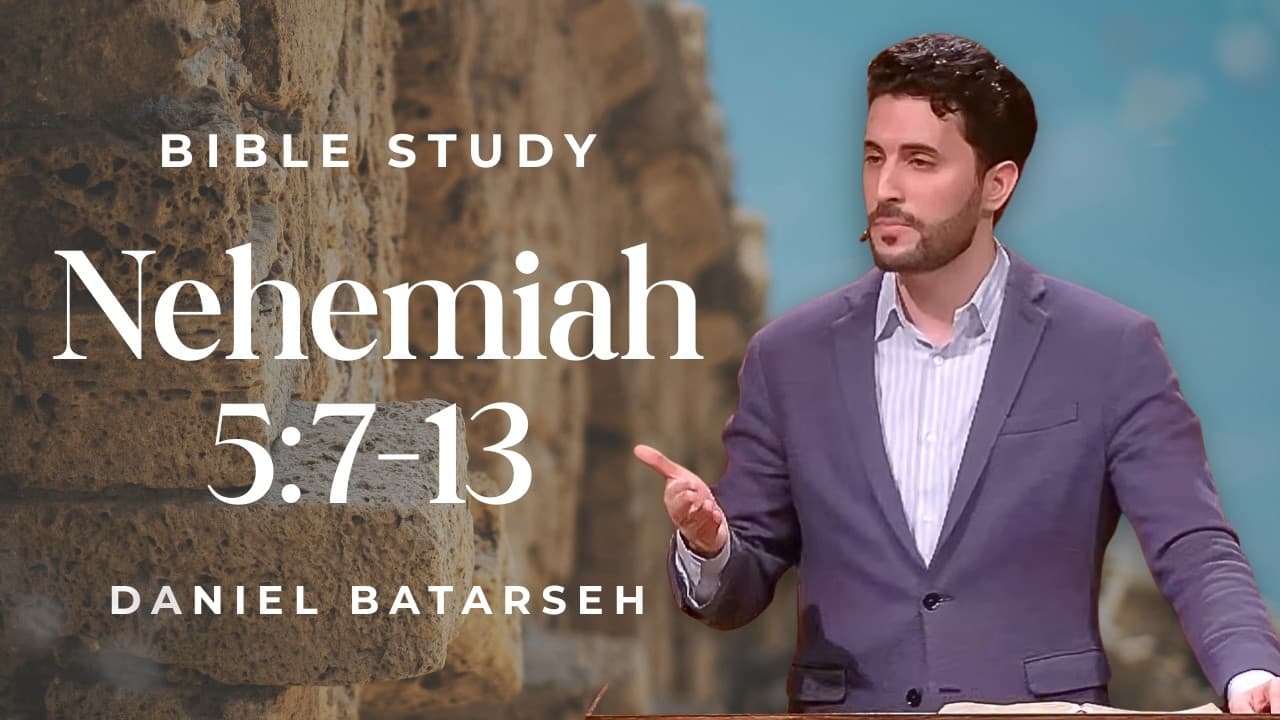
Nehemiah 5 reveals a stunning pattern: unconfronted sin silences praise, and genuine repentance restores it. This verse-by-verse study shows why the fear of God governs everything.
The people of Jerusalem could not praise God. Not because the walls were broken, not because enemies surrounded them, but because sin was festering inside their own community — and nobody had done anything about it. That is the explosive reality buried in Nehemiah 5:6–13, and it carries a warning that most churches desperately need to hear: unconfronted sin doesn't just damage relationships. It suffocates worship.
This passage shows us a leader who felt righteous fury but refused to act on impulse, who confronted powerful men without flinching, and who understood that repentance isn't complete until restitution is made. And when it was all over — offender and offended alike — the whole assembly said amen and praised the Lord.
The journey from outcry to worship is the story of Nehemiah 5. And the road between those two destinations runs straight through the fear of God.
A Wise Man Holds It Back
Nehemiah was furious. Verse 6 makes that plain: "I was very angry when I heard their outcry and these words." But what he does next is what separates a wise leader from a reckless one. He doesn't storm into the room and let everybody have it. He takes counsel with himself. He steps back. He thinks. He prays.
Proverbs 29:11 says, "A fool gives full vent to his spirit, but a wise man quietly holds it back." The Bible's definition of a fool is startling — it's the person who believes they'll be more effective if they let everyone in the room know exactly how they feel in the moment. That's foolishness. Wisdom says: I feel this deeply, but I will wait for the right time, the right setting, and the right words.
Many Christians make the mistake of having the right sentiments but responding to them in the wrong way. And the tragedy is that the wrong response often undermines the very thing you're trying to redeem. Nehemiah doesn't make that mistake. His righteous anger becomes righteous action — measured, deliberate, and devastating in its precision.
Nobody Gets a VIP Section in the Kingdom of God
Here is what made this confrontation so uncomfortable: the guilty parties were the nobles and the officials. These weren't fringe members of the community. They were the established leaders — wealthy, well-connected, powerful. Men Nehemiah likely worked alongside when he first arrived in Jerusalem (see Nehemiah 2:16). And now he discovers they've been enslaving their own people through predatory lending.
Three truths emerge from verse 7 alone.
First, Christians in positions of authority are not immune to serious sin. Scandals among church leaders are nothing new; they've been happening throughout redemptive history. The particular sin here is greed — which is precisely why one of the qualifications for an elder is that he must not be a lover of money. As Pastor Daniel Batarseh put it bluntly: "People who love money and hold positions of authority don't see God's people as sheep. They see them as walking dollar signs" (watch at 32:01).
Second, influential members are never exempt from biblical confrontation. When favoritism is tolerated in a congregation, holiness is compromised. You treat the wealthy with kid gloves, hold them to less accountability because they can make moves on your behalf, and you've created a foothold for sin to corrupt everything. James 2:1–9 addresses this directly — the early church gave the best seats to the rich and overlooked the poor. Does that happen today? Consider the megachurch that created a designated VIP section for celebrities. If a celebrity wants a better seat, the answer is simple: come early. The church is not a society that ranks people by net worth. God's Word sees us all equal at the foot of the cross.
Third, some sins must be confronted publicly. Nehemiah held a great assembly. The general rule is this: if the sin is private, deal with it privately. The more public the sin, the more public the confrontation must be. 1 Timothy 5:20 gives the reasoning: "As for those who persist in sin, rebuke them in the presence of all, so that the rest may stand in fear." Let the community see that nobody is above reproach. Let the congregation understand there are consequences.
And notice what calling this assembly required: the wall-building stopped. Everything came to a halt. You would think that's a loss. It wasn't. Nehemiah understood something critical — there is no point continuing ministry if the people involved are in sin. Holiness is more important than building projects. Ignore sin in the congregation, and you will eventually forfeit the blessing of God on the work.
Undoing the Work of Redemption from the Inside
Nehemiah's rebuke in verse 8 reveals something deeper than we might have initially grasped. When he arrived in Jerusalem, part of his mission — beyond rebuilding walls — was spending his own money to buy back Jewish brothers who had sold themselves into slavery to Gentile masters. These were Jews who returned from Babylonian exile with empty pockets and took loans from Gentiles who had moved into the region during their absence. Some remained enslaved for years.
Nehemiah remembered Leviticus 25:47–49, which anticipated exactly this scenario and instructed that a brother, uncle, cousin, or close relative could redeem the enslaved person (watch at 45:38). So Nehemiah acted. He redeemed them. He brought them home.
And then the nobles turned around and enslaved them again through crushing interest and impossible collateral. Some were even selling Jewish slaves back to Gentile masters for profit. This is what made Nehemiah's blood boil. These leaders were reversing the very work of redemption he had labored to accomplish.
The application to the church is painfully direct. It is possible for professing Christians to counteract the work of other Christians. A new believer gets saved, delivered from the world, brought into the church — and because of spiritually compromised members inside that community, they get reintroduced to the same temptations they were rescued from.
One story from the sermon drove this home like a nail. A man, bound in addiction and suffering, approached after a meeting — someone known for years as a believer. When asked where it all started, he answered: the praise team at his church. They would go up and sing on Sunday, then spend the week getting high together. As Pastor Daniel Batarseh said with visible grief: "From who? The world? No. From those within" (hear this moment). The church must be a safe haven, not a den hiding those who enjoy sin and lure others back into bondage.
The Fear of God Governs Everything
Nehemiah's diagnosis in verse 9 cuts to the bone: "Ought you not to walk in the fear of our God to prevent the taunts of the nations, our enemies?" The root problem wasn't greed. Greed was the symptom. The disease was a missing fear of God.
This is the second reference to the fear of God in Nehemiah. The first appears in 1:11, where Nehemiah describes his prayer partners as those who "delight to fear your name." Strange phrase — delighting in fear. But if you understand what the fear of God actually is, you would pursue it like treasure.
What does the fear of God produce according to verse 9? It makes you mindful of how your walk impacts your witness. A person who fears God regularly asks: will what I'm about to do give a confusing message to those watching who don't believe? Will this reinforce the hardheartedness of someone already resistant to Christ? Nehemiah worried that the surrounding nations would look at Jews enslaving Jews and conclude: they're no different from us.
A small illustration made this concrete in a way no theological abstraction could. Every week, a man comes to cut the grass. He waits until the end of the season to collect payment. So every visit gets recorded — date by date — to ensure not a single week is missed. When the man came to the door and saw the meticulous records, his eyes widened. "You recorded every week?" The answer came without premeditation: "Because I fear God. I'm not looking to cheap you out of thirty or sixty dollars. God is watching me to see if I'm honest" (watch at 56:08).
That's what the fear of God looks like on a Tuesday afternoon. It governs the small transactions. It shapes how you treat the person who has no leverage over you. And Nehemiah understood that this fear was not his own invention — it came straight from Leviticus 25:36: "Take no interest from him or profit, but fear your God, that your brother may live beside you." This was biblically informed rebuke, not spontaneous moralizing.
Repentance That Gives Back
Nehemiah doesn't just tell them to stop. He tells them to return everything. Verse 11: "Return to them this very day their fields, their vineyards, their olive orchards, and their houses." This very day. Not tomorrow. Not next quarter. Today.
Here is a truth about repentance that most people miss: genuine repentance, when possible and necessary, includes restitution. It's not enough to say "I'll never do it again." A truly repentant heart looks backward and asks: how can I repair the damage my sin caused?
Zacchaeus understood this. In Luke 19:8–9, he promised to give half his resources to the poor and repay fourfold anyone he had defrauded. Where did he get that number? Either from Exodus 22, which required fourfold restoration for stolen property, or from Leviticus 6, which required repayment plus twenty percent — in which case Zacchaeus went far beyond what the law demanded. Either way, Jesus responded: "Today salvation has come to this house." Not because restitution earned salvation, but because restitution proved his heart had been genuinely touched by grace.
Nehemiah then calls the priests — not to repent, but to witness the oath. The nobles make their promise in the presence of spiritual authority, which makes the vow heavier, more solemn. And there's a principle here: when we place ourselves under spiritual authority, we create a greater sense of accountability to God. Being committed to a local church with identifiable, God-fearing leadership makes sinning harder. That's a gift, not a burden.
Then comes the dramatic warning. Nehemiah shakes out the fold of his garment: "So may God shake out every man from his house and from his labor who does not keep this promise." And the response? "All the assembly said amen and praised the Lord."
All of them. Not just the oppressed — that would make sense. The oppressors too. The nobles who just committed to giving back everything they'd gained. They praised God. Because the greatest treasure in life is not how much money you make. It is being near God. And they couldn't get near him until the sin was dealt with.
From Outcry to Worship
Consider the arc of this chapter. Verse 1: "There arose a great outcry." Verse 13: "All the assembly said amen and praised the Lord." Pain became praise. Complaint became celebration. And the bridge between them was confronted sin and genuine repentance.
Psalm 51 shows the same pattern. David, broken by his sin, confesses: "O Lord, open my lips, and my mouth will declare your praise" (v. 15). He knew that unconfessed sin had sealed his mouth shut. He could not worship. And Acts 3 promises that when we repent and turn, "times of refreshing" come from the presence of the Lord.
As Pastor Daniel Batarseh said near the close: "Sin when it is tolerated, sin when it is ongoing, sin when it is not confronted with a fierceness will forfeit your worship. One of the first things to go when we have sin in our lives is our praise" (hear this moment).
If you struggle to worship freely — if you look to your left and right on a Sunday morning and wonder why others seem so free while your mouth stays closed — ask yourself the hard question. Is there unrepented sin clogging the channel? Repentance is not punishment. It is one of the most beautiful words in the Bible. Without it, there is no second chance, no fifth chance, no hundredth chance. It is the gift that uncorks the praise.
What to Remember
- The fear of God is not a feeling you manufacture — it is a settled awareness of God's presence that governs your behavior in every transaction, every relationship, every decision nobody else sees.
- Genuine repentance includes restitution: when your sin involved taking from others — money, dignity, trust — true turning looks backward to repair, not just forward to resolve.
- Favoritism toward the wealthy or influential in a church creates a foothold for sin that will eventually corrupt everything good in that community.
- Unconfronted sin silences worship — both personally and corporately. If a church cannot enter into free praise, one possible reason is unresolved sin that leadership has failed to address.
- Holiness matters more than building projects. Nehemiah stopped the wall construction to deal with sin because he understood that God's blessing on the work depends on the integrity of the workers.
- Spiritual authority in your life — identifiable, God-fearing church leadership — is not a constraint on your freedom. It is a gift that makes sinning harder and faithfulness more sustainable.
Questions to Sit With
- Is there an area of your life where you know the right thing to do but have been waiting for a more convenient time to do it — and could Nehemiah's "this very day" be God's word to you tonight?
- If the people closest to you — coworkers, neighbors, the person who cuts your grass — were asked whether you live like God is real, what would they say based on how you handle money and keep your word?
- Has someone who professed faith ever reintroduced you to a sin you'd been delivered from? How does Nehemiah's response challenge the way churches handle accountability?
- When was the last time you experienced the connection between repentance and renewed worship — where confessing sin actually unlocked praise you didn't know was trapped?
- Do you have identifiable spiritual authority in your life — leaders who know your name and would notice if you drifted? If not, what is keeping you from that kind of accountability?
Scripture Referenced
- Nehemiah 5:6-13 (primary text)
- Luke 24:25-27
- Proverbs 29:11
- Leviticus 25:36, 47-49
- James 2:1-9
- 1 Timothy 5:20
- Nehemiah 1:11
- Nehemiah 2:16
- Luke 19:8-9
- Exodus 22
- Leviticus 6
- Psalm 51:14-15
- Acts 3
This summary was generated by AI from the sermon "Nehemiah 5 (Part 2) Bible Study (Nehemiah Stops Oppression of the Poor) | Pastor Daniel Batarseh" preached by Pastor Daniel Batarseh at Maranatha Bible Church Chicago. Watch the full sermon →
Preached by
Pastor Daniel BatarsehSenior Pastor
This summary was generated by AI from the sermon transcript.
Based on the sermon