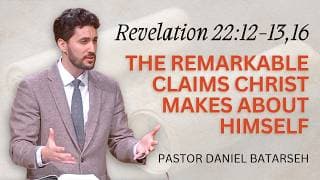
Jesus' final 'I am' statements in Revelation 22 aren't poetic flourishes — they're direct claims to be the Yahweh of Isaiah. Here's what most readers miss.
Most people read the closing verses of Revelation as a poetic farewell — a beautiful bookend to the Bible's final chapter. But when Jesus says "I am the Alpha and the Omega, the first and the last, the beginning and the end" in Revelation 22:13, He's not offering a devotional thought. He's making a claim so audacious that it should either bring you to your knees or make you walk away. Because every single one of those titles already belongs to someone in the Old Testament. They belong to Yahweh — the God of Abraham, Isaac, and Jacob. And Jesus takes them for Himself without a hint of apology.
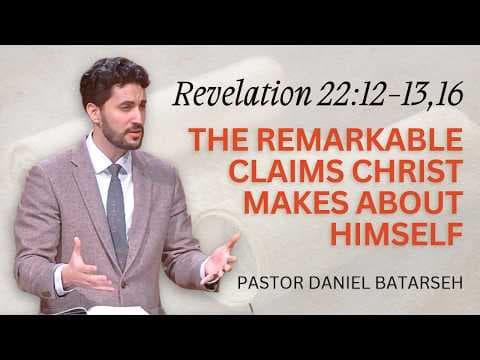
In Revelation 22:12–13 and 16, Christ makes three "I am" declarations in rapid succession. Each one reaches backward into the Hebrew prophets and pulls forward truths that identify Him as nothing less than God in the flesh, the fulfillment of centuries of messianic prophecy, and the sovereign ruler who will have the final word over every human life.
Who Is Actually Speaking in Revelation 22?
Before we can appreciate what Jesus says, we have to settle who is speaking — because the text doesn't make it easy. In Revelation 22, the voices shift without announcement. An angel speaks in verse 9. Then suddenly, verse 12 declares, "Behold, I am coming soon, bringing my recompense with me." There's no stage direction. No narrator stepping in to say, "And now Jesus spoke."
So how do we know this is Christ? The answer comes in verse 20, where John responds: "He who testifies to these things says, 'Surely I am coming soon.' Amen. Come, Lord Jesus." John identifies the speaker plainly. And that phrase — "he who testifies to these things" — links directly back to verse 16, where Jesus says by name: "I, Jesus, have sent my angel to testify to you about these things for the churches" (watch).
This matters enormously. The one saying "I am coming soon" is not an angel, not the Father speaking through a mediator. It is Jesus Christ Himself — stepping forward, giving His personal name, and authenticating every vision, every prophecy, and every promise in the entire book. As Pastor Daniel Batarseh put it: "He's giving his personal autograph. I, Jesus" (watch).
And what He says next should stop us cold.
"Bringing My Recompense With Me" — A Line Stolen from Yahweh
Look at the exact wording of Revelation 22:12: "Behold, I am coming soon, bringing my recompense with me, to repay each one for what he has done." Two words demand attention: behold and with me. Jesus wants you to stop and fix your eyes on this. And He emphasizes that the reward isn't being sent ahead or delegated — it's coming with Him, personally.
Now open Isaiah 40:10: "Behold, the Lord God comes with might, and his arm rules for him; behold, his reward is with him, and his recompense before him." And again in Isaiah 62:11: "Behold, your salvation comes; behold, his reward is with him and his recompense before him."
The parallel is unmistakable. Jesus isn't just echoing Isaiah's language — He's appropriating it. These prophecies describe Yahweh coming to His people with divine reward. Jesus takes the same words and applies them to His own return. The implication is staggering: Jesus is identifying Himself as the God of the Old Testament.
But how can He claim to repay every single person for what they've done? Because He possesses something only God possesses — total knowledge of the human heart. Back in Revelation 2:23, speaking to the church in Thyatira, Christ declares: "All the churches will know that I am he who searches mind and heart, and I will give to each of you according to your works." Notice — He doesn't say the Father will reveal this information to Him. He says I am the one who searches. This is omniscience on display. Every thought, every motive, every hidden ambition. Perfect knowledge. Perfect assessment.
And this personal evaluation won't happen on a corporate scale. It won't be Maranatha Bible Church standing before the throne as a group. It will be you. Eye to eye. Face to face. "What did you do with the gifts I gave you? What did you do with the opportunities I provided you? What did you do with the warnings that I showed you?" (hear this moment).
That thought can feel terrifying. But there's a liberating side to it. Your ministry is not ultimately subject to the opinions of other people. Christ's standard is the one that matters — and His yoke is easy, His burden light. Even if nobody puts your name on a plaque, even if you remain unknown your entire life, He has the final word about the value of what you've done. The fullness of your reward awaits His return. It's only going to get better.
But there's a warning embedded here too. Second John 1:8 says plainly: "Watch yourselves, so that you may not lose what we have worked for, but may win a full reward." A full reward implies a partial one is possible. What determines the difference? Your faithfulness — and, John warns, the doctrine you sit under. What you believe determines how you behave. Always.
"The First and the Last" — A Title That Belongs to Only One God
Revelation 22:13 piles up three titles: "I am the Alpha and the Omega, the first and the last, the beginning and the end." Alpha and Omega — the first and last letters of the Greek alphabet. Everything originated with Christ. Everything will end with Christ. He gave the first word. He will have the last.
But "the first and the last" carries a specific Old Testament weight that no Jewish listener could miss. Isaiah 48:12–13: "Listen to me, O Jacob, and Israel, whom I called! I am he; I am the first, and I am the last. My hand laid the foundation of the earth, and my right hand spread out the heavens." And Isaiah 44:6: "Thus says the Lord, the King of Israel and his Redeemer, the Lord of hosts: 'I am the first and I am the last; besides me there is no God.'"
The one who called Israel. The one who laid the earth's foundation. The one who stretched out the heavens. The King. The Redeemer. The Lord of hosts. He is the first and the last. And Jesus claims that title three times in Revelation — chapter 1, chapter 2, and chapter 22. Three times in Isaiah, three times in Revelation. The match is deliberate.
But Isaiah doesn't just declare this truth — he shows us what it does to people. In Isaiah 41:4–7, the nations hear that God calls the generations from the beginning, that He is the first and with the last. Their response? They tremble. They draw near. They encourage one another. So far, so good. And then verse 7: they start making idols. The craftsman strengthens the goldsmith. They nail their false gods to the ground so they cannot be moved.
As Pastor Daniel Batarseh observed with visible intensity: "No matter how much revelation you get of the truth, no matter how much God manifests himself in his power, in his might, in his glory, you have a choice to make. Every single one of us does" (watch at 37:25). People make idols because they want a god they can control, contain, and conform to their liking. The true God — the first and the last — cannot be managed. And so you either melt in peace and crown Him King, or you turn your back and nail your idols deeper into the ground of your heart.
Which one are you?
The Branch, the Priest, and a Name That Changes Everything
The final claim in verse 16 is the most layered: "I am the root and the descendant of David, the bright morning star." That phrase — root and descendant — should trigger a messianic title that runs like a golden thread through the prophets: the Branch.
Jeremiah 23:5–6 prophesies a righteous Branch raised up for David who will reign as king and execute justice. Isaiah 11:1 pictures a shoot coming from the stump of Jesse — the Davidic dynasty cut down by judgment, reduced to a stump, yet still alive in its roots. The Branch is a sign of hope: God's promise to David still stands, even after exile.
But Zechariah takes this further in a way that should make your jaw drop. In Zechariah 3:8, the prophet addresses Joshua the high priest — not Zerubbabel, the actual descendant of David — and tells him: "Behold, I will bring my servant the Branch." Why tell a priest he's a sign of a coming king? Because the Branch will be more than a king. Zechariah 6:9–13 makes this explicit: a crown is placed on Joshua the high priest's head, and the prophecy declares that the Branch "shall sit and rule on his throne. And there shall be a priest on his throne."
This was illegal under the old covenant. The priestly line and the royal line were never to intersect. A king could not serve as priest. A priest could never become king. Yet here is a prophet, under divine authority, crowning a priest and declaring that the coming Branch will unite both offices. Only one figure in history fulfills this: Jesus Christ — both King and High Priest forever.
And the name seals it. Joshua — Yehoshua — means "the Lord is salvation." Ezra 3:2 gives us the shortened form: Jeshua. In Hebrew: Yeshua. In Greek: Jesus. The high priest who stood as a sign of the Branch bore the very name of the one he foreshadowed.
So when Jesus says in Revelation 22:16, "I am the root and the descendant of David," He's saying something that only God incarnate can say: "I created this family tree, and I came from this family tree. I called David into existence, and I am the seed of David. I'm the first and the last, the beginning and the end" (hear this moment). And notice — He doesn't say "I was the descendant of David." He says "I am." Even in glory, risen and exalted, He still bears His humanity. He still holds those nail-pierced hands.
What to Remember
- When Jesus says "Behold, I am coming soon, bringing my recompense with me," He is quoting Isaiah's descriptions of Yahweh — and applying them to Himself without qualification. This is a direct claim to deity.
- Christ will evaluate every believer personally — not corporately, not by delegation. His standard of faithfulness is achievable for anyone, but a full reward depends on what you do with what He's given you.
- The title "the first and the last" appears three times in Isaiah attributed to Yahweh and three times in Revelation claimed by Jesus. The identification is intentional and unmistakable.
- The messianic title "the Branch" unites the offices of king and priest — something the old covenant strictly prohibited. Only Jesus fulfills this, and even the high priest who foreshadowed Him bore His very name: Yeshua.
- Knowing that God is the first and the last should extinguish anxiety about the future. Every empire, every president, every shift in history is setting the stage for Christ to step onto it and claim everything as His own.
Questions to Sit With
- If Jesus will personally evaluate your life — every gift, every opportunity, every warning — what would He say about the last six months?
- Isaiah shows that some people see God's sovereignty clearly and respond by nailing their idols deeper into the ground. What idol in your life are you reinforcing rather than surrendering?
- Jesus says "I am" the descendant of David — present tense, even in glory. What does it mean for your faith that the risen Christ still identifies with His humanity?
- Second John warns that false teaching can cost you your full reward. How carefully do you evaluate what you listen to and who you learn from?
- If you truly believed that the first and the last is governing every second of history, what would you stop losing sleep over tonight?
Scripture Referenced
- Revelation 22:12–13, 16, 20
- Revelation 22:6, 9–11
- Revelation 2:18, 23
- Isaiah 40:10
- Isaiah 62:11
- Isaiah 48:12–13
- Isaiah 44:6–8
- Isaiah 41:4–7
- Isaiah 11:1
- 2 John 1:8
- Jeremiah 23:5–6
- Zechariah 3:8
- Zechariah 6:9–13
- Ezra 3:2
This summary was generated by AI from the sermon "The Remarkable Claims Christ Makes About Himself | Revelation 22:12-13,16 | Pastor Daniel Batarseh" preached by Pastor Daniel Batarseh at Maranatha Bible Church Chicago. Watch the full sermon →
Preached by
Pastor Daniel BatarsehSenior Pastor
This summary was generated by AI from the sermon transcript.
Based on the sermon