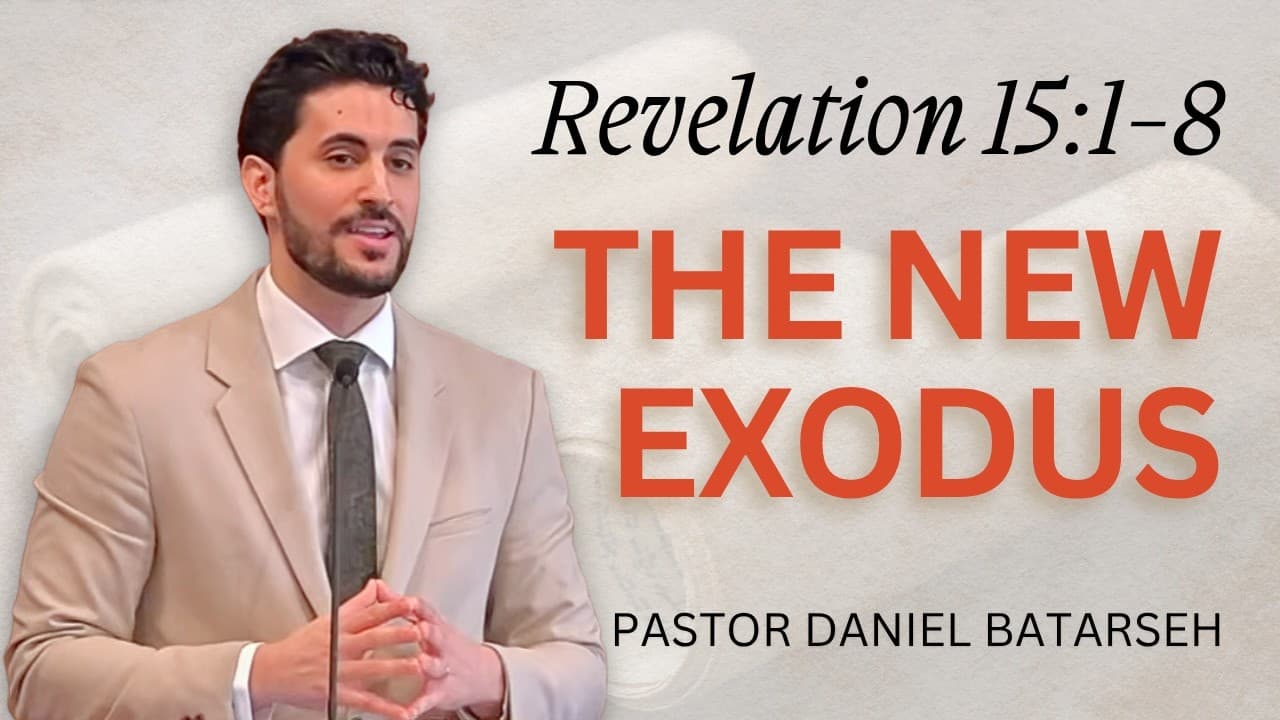
Revelation 15 paints a terrifying picture — a moment when God fills His temple with smoke and refuses every prayer. But today, the heavenly tabernacle is open. Don't wait.
There is coming a moment when God will refuse to hear a single prayer.
Not because He's absent. Not because He's indifferent. Because He has wrapped Himself in a cloud of glory so dense, so final, that no cry, no plea, no desperate fast will penetrate it. Revelation 15:8 describes this scene: the heavenly sanctuary filled with smoke from God's glory, sealed shut, inaccessible — "until the seven plagues of the seven angels were finished." The prophet Jeremiah knew this reality centuries earlier when he wrote, "You have wrapped yourself with a cloud so that no prayer can pass through" (Lamentations 3:44). What most people miss about Revelation 15 is that it isn't merely a prelude to judgment — it's a portrait of a closed door. And the whole chapter is designed to make you ask: is the door still open for me?
It is. But it won't be forever.
The Shortest Chapter with the Longest Shadow
Revelation 15 is the shortest chapter in the entire book — just eight verses. But as Pastor Daniel Batarseh observed, "Don't mistake its brevity for insignificance" (watch at 20:41). What John records here is the opening scene of the final act. The previews are over. The seven bowl judgments — the last series of God's wrath before Christ returns — are about to be poured out. And the Holy Spirit, through John, doesn't just set the stage mechanically. He weaves together a tapestry of Old Testament imagery so rich that the entire chapter functions as one grand, unmistakable picture: a new Exodus.
Consider what John sees in rapid succession: plagues, a sea, a delivered people standing beside (or upon) that sea, a song of Moses, and a tabernacle. Every detail is deliberate. Every element points backward to Israel's deliverance from Egypt and forward to the final deliverance of God's people from a world ruled by the beast. The chapter title isn't in your Bible, but the Holy Spirit practically writes it in neon: this is the Exodus all over again — only this time, it's the last one.
The plagues that once fell on Pharaoh's Egypt will now fall on the entire rebellious earth. The sea that Israel crossed on dry ground now appears in heaven as a sea of glass mingled with fire. And the people standing beside it? They're not Israelites escaping slavery. They're Christians who escaped something far worse — the regime of the Antichrist — by refusing to bow, even when it cost them their heads.
Super Christians Who Gave God All the Credit
The choir in this passage is extraordinary. Verse 2 identifies them: "those who had conquered the beast and its image and the number of its name." These are believers who lived through the darkest hour of human history. They faced the full machinery of the Antichrist's regime — economic exclusion, social persecution, and ultimately execution — and they did not flinch. They refused the mark. They refused to worship the image. They lost everything, including their lives.
You might call them the most impressive believers who ever lived. And yet when they open their mouths to sing, listen to what comes out: "Great and amazing are your deeds, O Lord God the Almighty. Just and true are your ways, O King of the nations. Who will not fear, O Lord, and glorify your name? For you alone are holy." Six times in a single stanza — you, your, you, your, you, your. Not a syllable about their own courage. Not a word about their sacrifice. Not one line of self-congratulation.
As Pastor Daniel Batarseh put it: "These victorious, triumphant believers, when it comes to worship, give all the glory to God. You. Your. It's all about you" (watch at 2:09). The point cuts deep. If the martyrs of the tribulation — people who literally died rather than deny Christ — can stand before God and claim nothing for themselves, what does that say about our worship? True worship, the kind heaven models for us throughout Revelation, is the ability to acknowledge that no matter what we do for Christ, no matter what we accomplish in His name, the boast belongs to God alone. Anything that happens in us or through us only happened because He made it possible.
This is the song of the new Exodus. Not "look what we survived," but "look at who You are."
Angels Dressed Like Jesus — and Why That Disturbs People
What emerges from the opened tabernacle is sobering: seven angels carrying seven plagues, the final installment of God's justice against an unrepentant world. But John includes a detail that's easy to skip and impossible to forget once you see it. These angels are wearing golden sashes around their chests.
The last time anyone in Revelation wore a golden sash was chapter 1, verse 13 — and it was Jesus Himself, the glorified Son of Man, standing among the lampstands. The connection is intentional. These angels are dressed to resemble Christ. They reflect His nature. They represent His will. What they're about to do is what He wants done.
This is where the sermon pressed into uncomfortable territory. "That irks people," the teaching acknowledged, "because they have developed a theology about the person of Jesus Christ that completely disassociates him from any judgment against sinners" (watch at 6:26). But the text won't let us maintain that comfortable fiction. The angels reporting for duty aren't rogue agents. They aren't operating independently. They walked out of the presence of God, dispatched from the undefiled glory of the heavenly tabernacle, wearing the uniform of Christ Himself.
God's judgment is real. And the Jesus who wept over Jerusalem is the same Jesus who sends these angels with bowls of wrath. To deny one is to deny the other. The golden sash settles the argument.
When the Cloud Fills the Temple and the Door Locks
Here is the detail that should make every reader stop and think. After the angels receive their bowls, verse 8 records that "the sanctuary was filled with smoke from the glory of God and from his power, and no one could enter the sanctuary until the seven plagues of the seven angels were finished."
This has happened before. In Exodus 40:35, when the tabernacle was completed, "Moses was not able to enter the tent of meeting because the cloud settled on it, and the glory of the Lord filled the tabernacle." In 1 Kings 8:10-11, when Solomon dedicated the temple, "the priests could not stand to minister because of the cloud, for the glory of the Lord filled the house of the Lord." Both times, the pattern was identical: the cloud fills the dwelling place, and the priests — whose primary duty was intercession — could not enter to do their work.
Now the same thing happens in the true tabernacle, the heavenly one that the earthly copies were modeled after. And the implication is devastating. If no one can enter the sanctuary, then no intercession can take place. No prayers will be received. No cries for mercy will be heard. God has determined to pour out every last drop of these bowl judgments, and He will not be stopped, softened, or redirected.
"It doesn't matter how strong the nations cry out, doesn't matter how much they plead, doesn't matter how long they fast. In fact, as we're about to discover with these judgments, they're gonna be in such rapid succession, there'll be virtually no time to be able to pray anyway" (hear this moment). The tabernacle will be closed for service until every plague is finished. That sentence should echo in the mind of anyone who treats God's patience as permanent.
But Right Now, the Door Is Open
And here is where the sermon turned from warning to invitation — and it was the most powerful moment of the afternoon.
The status of the heavenly tabernacle today is not what it will be in Revelation 15. There is no cloud sealing it shut. There is no smoke barring entry. Right now, at this very hour, Jesus Christ — our great high priest — is alive and active in that true tabernacle, doing the one thing that will one day cease: interceding.
Hebrews 8:1-2 tells us that Christ performs His priestly work in the true tabernacle, the heavenly one that Moses's earthly version merely copied. And Hebrews 7:25 tells us exactly what He's doing there: "He is able to save to the uttermost those who draw near to God through him, since he always lives to make intercession for them."
Always. Right now. Without interruption. Without fatigue. Without any cloud blocking the way.
The contrast is staggering. In Revelation 15, the tabernacle opens and judgment comes out. But today, the tabernacle is open and mercy goes in. Every prayer offered through faith in Christ passes through an unobstructed heaven, carried by a High Priest who never dies, never retires, never needs a replacement, and never runs out of the merit of His own eternal blood.
He doesn't borrow from heavenly lambs or oxen. He brings His own sacrifice — once offered, forever sufficient — every single time. And He brings it on behalf of anyone who will humbly come.
The question Revelation 15 forces upon every reader is not merely academic. It is urgent. The door that is open now will one day close. The intercession that is available now will one day cease. The patience that holds back final judgment will one day be exhausted — not because God is capricious, but because He gave "way too many chances" and the world still shook its fist. Don't wait for the smoke to fill the temple to decide you need a priest.
You have one. He's alive. He's willing. And He's there right now.
What to Remember
- Revelation 15 is not merely a prelude to judgment — it's a portrait of the new Exodus, with plagues, a sea, delivered saints, a song of Moses, and a tabernacle all pointing to God's final deliverance of His people.
- The martyrs of the tribulation — believers who died rather than worship the beast — sing a song with zero self-reference. Six times they say "you" and "your." True worship gives God all the credit, especially when we've paid a high price.
- The golden sashes on the seven angels match what Jesus wore in Revelation 1:13. These angels reflect Christ's nature and execute Christ's will. You cannot separate Jesus from judgment and still have the Jesus of Scripture.
- When God's glory cloud fills the heavenly temple, no one can enter — meaning no intercession, no prayer, no plea will be received until every bowl of wrath is poured out. There is a point of no return.
- Right now, Jesus Christ serves as our High Priest in that same heavenly tabernacle, and Hebrews 7:25 says He "always lives to make intercession." The door that will one day close for judgment is currently open for mercy.
Questions to Sit With
- If the most faithful Christians in history — tribulation martyrs — refused to take any credit in worship, what does your worship reveal about who you think deserves the glory?
- Have you constructed a version of Jesus that is comfortable with your sin because you've removed His role as judge? What does the golden sash on the angels say to that theology?
- Lamentations 3:44 describes a moment when God wrapped Himself in a cloud so no prayer could pass through. Is there any area of your life where you're presuming on God's patience — assuming the door will always be open?
- If Christ is actively interceding for you right now in the heavenly tabernacle, what request have you been too discouraged, too ashamed, or too distracted to bring to Him?
- Revelation 15 shows the tabernacle opening for judgment to come out. Today it's open for mercy to go in. What are you waiting for?
Scripture Referenced
- Revelation 15:1-8 — Primary passage
- Revelation 1:13 — The glorified Christ wearing a golden sash
- Exodus 40:35 — God's cloud filling the tabernacle so Moses could not enter
- 1 Kings 8:10-11 — God's glory filling Solomon's temple
- Lamentations 3:44 — God wrapping Himself in a cloud so no prayer passes through
- Hebrews 8:1-2 — Christ serving in the true heavenly tabernacle
- Hebrews 7:25 — Christ always living to make intercession
This summary was generated by AI from the sermon "The New Exodus | Revelation 15:1-8 | Pastor Daniel Batarseh (4/12/26)" preached by Pastor Daniel Batarseh at Maranatha Bible Church Chicago. Watch the full sermon →
Preached by
Pastor Daniel BatarsehSenior Pastor
This summary was generated by AI from the sermon transcript.
Based on the sermon
The New Exodus | Revelation 15:1-8 | Pastor Daniel Batarseh (4/12/26)
Watch Full SermonRelated Articles
What Revelation 21 Says About Heaven That You've Never Noticed
Pastor Daniel Batarseh · October 11, 2026
What Revelation 21 Says About Eternity (It's Not What You Picture)
Pastor Daniel Batarseh · October 11, 2026
Hebrews 9 and Why Christ's Second Coming Isn't About Sin
Pastor Daniel Batarseh · October 4, 2026