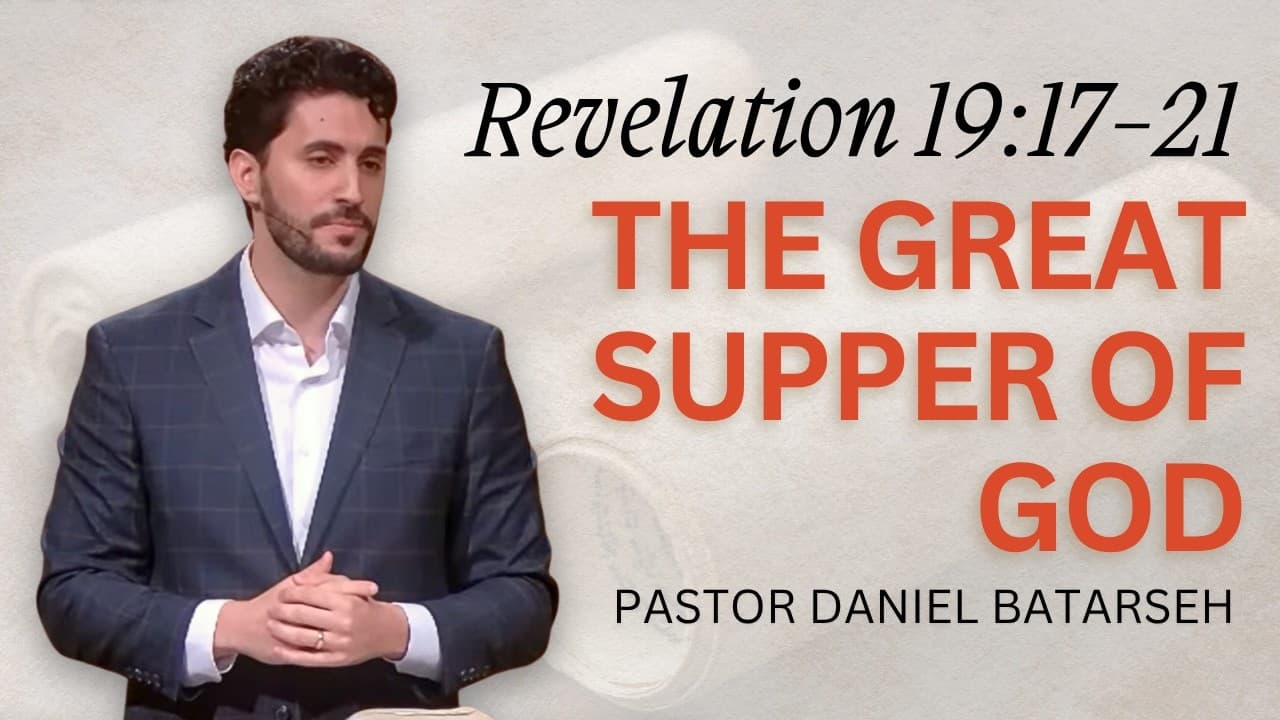
Revelation 19 presents two suppers — the marriage feast of the Lamb and the great supper of God. The detail the United Nations left off its famous plaque tells you everything about why the world can't have peace without the Prince of Peace.
The United Nations headquarters has a plaque inscribed with words from the prophet Isaiah. It reads: "They shall beat their swords into plowshares and their spears into pruning hooks." Beautiful. Hopeful. And deliberately incomplete.
They left out the first half of the verse. Isaiah 2:4 begins: "He shall judge between the nations and shall decide disputes for many peoples." The diplomats wanted the promise of peace. They just didn't want the Person who brings it. And that omission — that quiet editorial decision to quote the dream while erasing the Dreamer — captures something essential about what Revelation 19:17–21 is doing. This passage forces you to reckon with a Christ who doesn't merely invite. He conquers. And if you will not come to His wedding feast, you will be served at a very different supper.
Two Suppers, One Choice
Revelation 19 is structured around a contrast so sharp it should make your stomach turn. Earlier in the chapter — verse 7 — the cry goes out: "Let us rejoice and exult and give him the glory, for the marriage supper of the Lamb has come, and his Bride has made herself ready." That's the celebration. The feast of all feasts. The consummation of everything God has been doing since Genesis 3.
But then comes verses 17–21, and the angel standing in the sun issues a grotesque invitation of his own — not to saints, but to birds. Come. Gather. Eat the flesh of kings, the flesh of captains, the flesh of mighty men. This is "the great supper of God," and it is not a banquet you want to attend.
Two suppers. Same chapter. You are headed to one of them.
The marriage supper is for those who said yes to the Lamb. The great supper of God is what happens to those who said no — not passively, not politely, but with the full weight of human rebellion marshaled against the returning King. And the text does not flinch from describing what that rebellion earns.
The Most Shameful Thing That Could Happen to a Body
We've sanitized death in the modern West. We put bodies in satin-lined boxes and lower them gently into manicured ground. We speak in euphemisms. But the ancient world understood something we've forgotten: what happens to your body after death says something. It testifies. A proper burial honored the image of God stamped on human flesh. To be left unburied — exposed, consumed by animals — was the ultimate disgrace.
This pattern runs deep through Scripture. In Psalm 79:1–2, the psalmist doesn't lament the destruction of Jerusalem in the abstract. The first thing that breaks him is this: "They have given the bodies of your servants to the birds of the heavens for food, the flesh of your faithful to the beasts of the earth" (watch at 4:27). That's not just death. That's desecration. That's the erasure of dignity.
And here's what should sober you: God Himself issued this very threat against His own people when they persisted in rebellion. Deuteronomy 28:26 — part of the covenant curses for disobedience — reads: "Your dead body shall be food for all the birds of the air and for the beasts of the earth, and there shall be no one to frighten them away" (hear this moment). As Pastor Daniel Batarseh put it, God was saying to those who turned their backs on Him, "You will not experience the honor of a burial, but that you would be so devoured by the beasts of the earth and the birds of the air until you essentially disappear, physically speaking" (watch at 5:40).
So when Revelation 19 describes the birds gorging on the armies gathered against Christ, it isn't introducing something new. It's the final, cataclysmic fulfillment of a pattern as old as the covenant itself. God warned. The prophets warned. And now the angel standing in the sun is issuing the last call — not to repentance, but to vultures.
The Verse the United Nations Didn't Want
This is where the sermon cut through every comfortable assumption about peace. We all want Isaiah 2:4. Every beauty pageant contestant wants world peace. Every diplomat drafts resolutions toward it. The United Nations literally carved the aspiration into a wall.
But they quoted only the second half of the verse: swords into plowshares, spears into pruning hooks, nations not learning war anymore. They left out the prerequisite — the One who "shall judge between the nations and shall decide disputes for many peoples."
Pastor Daniel Batarseh didn't let that irony sit quietly: "People want peace. They don't want the Prince of Peace. Go on dreaming. Have as many meetings as you want at the UN. You need Christ if you want this prophecy fulfilled" (watch at 8:57).
That's not arrogance. That's the text. Isaiah doesn't say peace will emerge from better diplomacy, stronger institutions, or more enlightened politics. He says peace comes when a Person occupies a throne — the right throne, from Jerusalem. Cut that Person out, and you don't get the peace. You get an inscription on a wall in a building where nations have been failing to stop wars for eighty years.
The world will not beat its swords into plowshares because the world decided to be nicer. It will happen because the King returns and makes it happen. And Revelation 19 tells you what happens to the swords that refuse to be beaten — they are gathered at Armageddon and broken by the Word of His mouth.
There will come a day, the text insists, when no one will know how to make war anymore. Not because humanity evolved past it, but because the One who has the right to rule will finally rule. As the sermon made plain: "There will be no need for a Second Amendment. There'll be no need for weapons. Nobody's gonna know how to do war anymore when He rules and reigns" (hear this moment).
That is either the most audacious claim in human history or it is the hope of the world. Revelation 19 says it's both.
A Bride Who Has Lost Sight of That Day
Here is where the sermon turned from exposition to conviction — and where it should press hardest on those of us who already claim the name of Christ.
If Revelation 19 presents two suppers, the question for the believer is not which one will I attend? That's settled by grace through faith. The question is: Am I living like someone who has a wedding to get ready for?
The prayer that bookended this sermon was not a prayer for the lost. It was a prayer for the church. And it stung. "Forgive us, Lord, for being a bride that has lost sight of that day" (watch at 0:23).
Think about that image. A bride who has forgotten her wedding day. She's still engaged. The ring is still on her finger. But she's stopped preparing. She's stopped longing. She's filled her calendar with so many other things that the date on the invitation has blurred. That's the church when eschatology becomes an academic category instead of a living hope.
And the sermon was honest about why. Some of us aren't thinking about the end times because we feel like we're living in the end times right now — personally. Marriages struggling. Children who have walked away. Trials that consume every ounce of mental and emotional energy. The pastor acknowledged that with a tenderness that honored the room: people "who don't even have room in their thinking for the end times. They feel like they're living in the end times with their personal struggles and challenges" (hear this moment).
But here's the thing about a wedding: you don't stop preparing for it because life got hard. If anything, the harder life gets, the more you need the hope of that day. The marriage supper of the Lamb is not an escape from reality. It is the arrival of the only reality that will never break, never disappoint, never end.
The return of Christ is not a doctrine to be debated. It is a day to be desired. And the church that stops desiring it has already begun to drift.
The Invitation That's Still Open
Revelation 19 ends with finality. The beast is captured. The false prophet is thrown into the lake of fire. The armies are slain. The birds eat. It is over.
But you are reading this article before that day. The angel has not yet stood in the sun. The birds have not yet been summoned. Which means the invitation to the other supper — the marriage supper of the Lamb — is still open.
The sermon closed with a prayer for those who are curious about Christ, fond of Him even, but haven't surrendered. "Lord, we pray that you would convince them of your love for them, of their need for a savior, of their sin, of the destiny of a life in the flesh. And Lord, they would surrender even before they leave this parking lot" (watch at 6:34).
Before they leave the parking lot. That's the urgency of this text. Not next month. Not after you've sorted out your questions. Now. Because Revelation 19 makes one thing devastatingly clear: there are only two tables being set. And every human being who has ever lived will sit at one of them.
The Lamb has been slain. The feast is being prepared. The bride is making herself ready — or at least, she should be.
Come, Lord Jesus.
What to Remember
- Revelation 19 presents two suppers in the same chapter — the marriage feast of the Lamb for His people and the great supper of God where the enemies of Christ become food for birds. Every person is headed to one of them.
- Being left unburied and consumed by animals was the ultimate disgrace in the ancient world — and God Himself threatened this judgment against His own rebellious people in Deuteronomy 28:26, a pattern that reaches its final fulfillment in Revelation 19.
- The United Nations inscribed Isaiah 2:4 on its wall but left out the first half — the part about God judging the nations. You cannot have the peace without the Prince of Peace.
- The church's greatest danger regarding the return of Christ is not theological error but emotional forgetfulness — becoming a bride who has stopped preparing for her wedding day.
- The urgency of Revelation 19 is not academic. The invitation to the marriage supper of the Lamb is still open today. It will not be open forever.
Questions to Sit With
- If someone looked at how you spend your time, your attention, and your emotional energy — would they conclude you are a person expecting a King to return?
- The UN wanted the promise of peace without the Person who brings it. Where do you do the same thing — wanting God's blessings while resisting His authority?
- What personal struggle has so consumed your thinking that the return of Christ has faded from a living hope into a distant doctrine? What would it take to let that hope breathe again?
- If you knew Christ was returning in six months, what would you stop doing? What would you start? Why aren't you living that way now?
- Who in your life is still "curious" or "fond of Christ" but hasn't surrendered — and what's keeping you from having that honest conversation with them this week?
Scripture Referenced
This summary was generated by AI from the sermon "The Great Supper of God | Revelation 19:17-21 | Pastor Daniel Batarseh (8/16/26)" preached by Pastor Daniel Batarseh at Maranatha Bible Church Chicago. Watch the full sermon →
Preached by
Pastor Daniel BatarsehSenior Pastor
This summary was generated by AI from the sermon transcript.

Based on the sermon
The Great Supper of God | Revelation 19:17-21 | Pastor Daniel Batarseh (8/16/26)
Watch Full SermonRelated Articles
What Revelation 21 Says About Heaven That You've Never Noticed
Pastor Daniel Batarseh · October 11, 2026
What Revelation 21 Says About Eternity (It's Not What You Picture)
Pastor Daniel Batarseh · October 11, 2026
Hebrews 9 and Why Christ's Second Coming Isn't About Sin
Pastor Daniel Batarseh · October 4, 2026