Paul was saved on the Damascus road — but he didn't receive his calling until later. Romans 1:1 reveals what it truly means to be a servant of Christ.
Paul was saved on the road to Damascus. But he didn't receive his calling that day.
That distinction — the gap between salvation and specific calling — is one most Christians never think about. We assume that the moment we come to faith, we should know exactly what God wants us to do. But Romans 1:1 tells a different story. Paul introduces himself with three descriptors: a servant of Christ Jesus, called to be an apostle, set apart for the gospel of God. Each phrase carries weight. Each one arrived at a different point in Paul's life. And the order matters more than we realize.
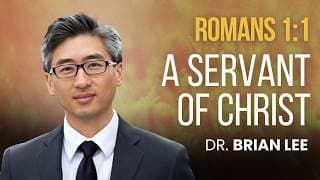
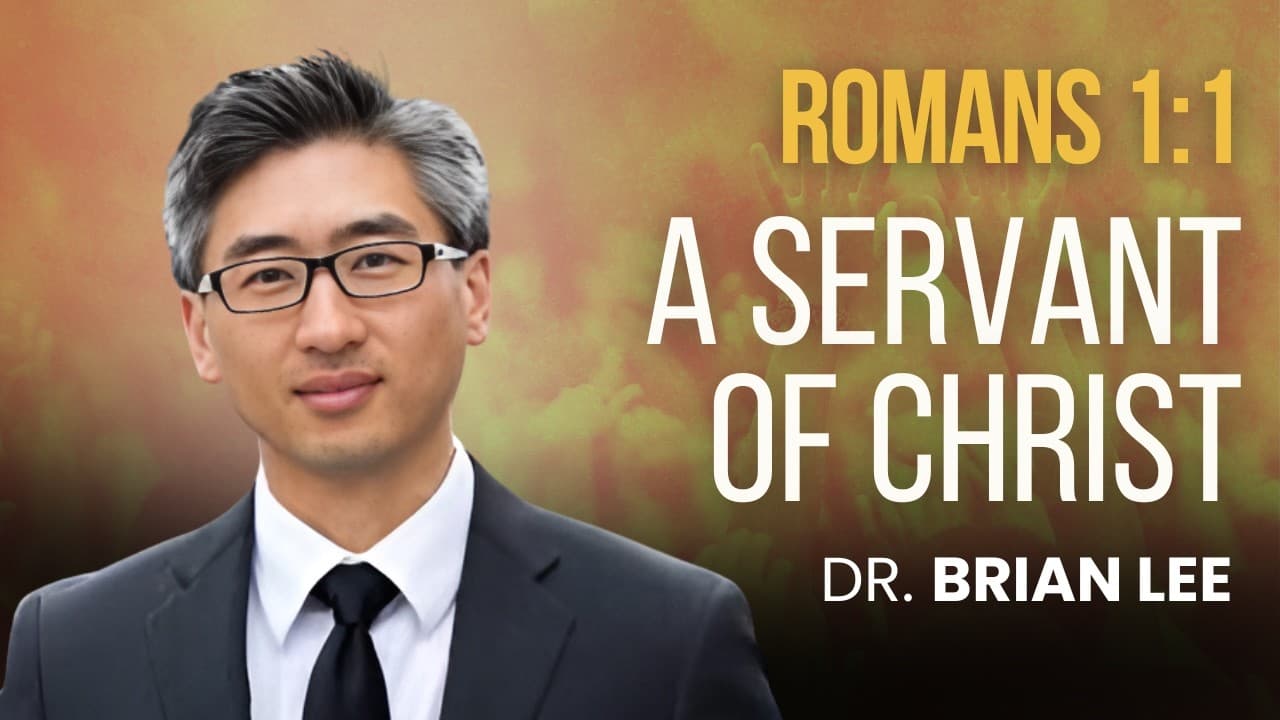
Dr. Brian Lee walked through this single verse on a Friday evening at Maranatha Bible Church, and what emerged was not a surface-level devotional on serving God. It was a careful, convicting portrait of what servanthood actually demands — and why most of us resist it.
Paul Didn't Know His Calling the Day He Was Saved
Here is where the sermon cut against the grain of how we typically tell Paul's conversion story. We compress it. We flatten the Damascus road into a single dramatic moment: blinding light, voice from heaven, instant apostle. But the text won't let us do that.
In Acts 9:6, Jesus tells the newly blinded Saul to "rise and enter the city, and you will be told what you are to do" (watch at 3:09). Notice what Jesus does not say. He does not say, "You are my apostle to the Gentiles." He says, essentially, go and wait. Paul surrendered to a voice before he understood the assignment.
It was Ananias — a disciple in Damascus, not an apostle, not a church elder, just a faithful believer who received a vision — who delivered the specifics. And how does Ananias greet him? "Brother Saul." Paul was already saved. Already a brother. But the calling had not yet arrived.
As Dr. Brian Lee put it: "Paul was saved, but yet he was yet to receive his specific calling, and he received that from Ananias, the words that Jesus gave him, that he would be a chosen instrument called to carry the gospel to the Gentiles and to kings and to the children of Israel" (hear this moment).
This reframes something crucial. If you are a believer who does not yet know your specific calling, you are not behind. You are not spiritually deficient. You are in the same position Paul was in during those first days after his conversion — saved, surrendered, and waiting on further instruction. The question is not whether the calling will come. The question is whether you are walking close enough to hear it when it does.
Three Years in Arabia: The Calling Had to Be Confirmed
But the story doesn't end with Ananias. Paul received his calling in Damascus, and then — remarkably — he went to Arabia for three years. Galatians 1:17 tells us this, and it's a detail most sermon series skip right over (watch at 4:29).
Three years. Not three days. Not a weekend retreat. Paul took the calling he received and went into the wilderness to confirm it.
What was he doing there? The sermon offered a picture that is both simple and profound: Paul was rereading the Hebrew scriptures. He was the "Hebrew of Hebrews." He knew the Old Testament backward and forward. But now he had a new Master. Every passage he had memorized as a Pharisee needed to be reread through the lens of Christ. The voice he had spent his life studying — the voice of Yahweh in the Torah, the Psalms, the Prophets — was the same voice that had knocked him off his horse.
This is not a throwaway biographical detail. It is a principle. Calling must be confirmed. And the primary instrument of confirmation is the Word of God.
If you've sensed a calling but haven't taken it to Scripture — haven't saturated yourself in the Word to test whether what you think you heard aligns with what God has actually said — then you haven't yet done what Paul did. He didn't rush to Rome. He went to Arabia. He opened the scrolls. He listened.
A Servant of Christ Serves Only One Master
The first principle from Romans 1:1 seems obvious until you let it interrogate your life: a servant of Christ serves only one master.
"Paul, a servant of Christ Jesus." No committee. No co-lords. No hyphenated allegiance. Christ Jesus, full stop.
What made this land was the way the surrounding verses were marshaled as evidence. The sermon walked through the first six verses of Romans and showed how relentlessly Christ-centered Paul's introduction is. Verse one: "servant of Christ Jesus." Verse three: "concerning his Son." Verse four: "the Son of God... Jesus Christ our Lord." Verse five: "for the sake of his name." Every sentence orbits the same center. There is no room in these verses for a divided heart.
This is where the teaching became uncomfortable. Because most of us don't struggle with choosing between Christ and some obvious rival — an idol of wood or stone. We struggle with the subtler fracture: Christ and career ambition. Christ and the approval of people. Christ and our own theological preferences about what parts of His Word we're willing to obey.
Which leads to what may have been the most convicting moment of the evening.
The Problem with Having a Problem with Paul
There was a sharp edge to this sermon, and it came early. Before the main text was even opened, a warning was issued — spoken in love, but spoken clearly.
"It is sad and unfortunate these days that we have some Christians who criticize or even attack the writings of Paul or twist his words or take them out of context" (watch at 7:16). The examples given were specific: Paul's teaching on marriage, on the roles of husbands and wives, on the role of women in the local church, on sexual immorality.
And then the hammer fell: "If anyone has a problem with the words of Paul, they have a problem with Christ himself" (hear this moment).
This was grounded in John 16:13, where Jesus promises that the Spirit of truth would come and guide the apostles into all truth — revealing Christ's own words through them. Paul's letters are not Paul's opinions. They are the words of Christ delivered through the Spirit of Christ. To dismiss Romans or Philippians or the Pastoral Epistles as "just Paul's cultural context" is to dismiss the Spirit who inspired them.
And it's not only Paul's words that carry authority. It's his life. Philippians 4:9 was read aloud: "What you have learned and received and heard and seen in me, practice these things" (watch at 9:00). Paul didn't just write truth. He lived it. And he had the audacity — the Spirit-given audacity — to say: watch how I live, and do the same.
That kind of authority is earned in the wilderness. In Arabia. In prison cells. In shipwrecks. It is the authority of a man who called himself a servant before he called himself an apostle.
Calling, Gifting, and the Courage to Ask the Question
The sermon circled back to Romans 12:4-8, where Paul describes the body of Christ — many members, different functions, gifts that differ according to grace. Prophecy. Service. Teaching. Exhortation. Generosity. Leadership. Mercy. Each one given, not chosen. Each one confirmed, not assumed.
And then the question was put directly to every person in the room: "What is your calling? Do you know what your calling is here tonight as you sit here and receive God's word?" (hear this moment).
That question hangs in the air. It's not rhetorical. It demands an answer.
But for those who don't yet have one, there was reassurance — not cheap comfort, but genuine pastoral care: "The Lord sees our hearts above all else in wanting to know what our gifting is and surrendering that to him that we might serve him faithfully in whatever calling he has for us" (watch at 1:39).
God is not hiding your calling from you like a cosmic game of keep-away. He reveals it "to the degree we hear his voice in his word and in prayer, to the degree we walk close with him." The variable is not God's willingness to speak. It is our willingness to draw near.
This is the pattern Paul modeled. Salvation on the Damascus road. Specific calling through Ananias. Confirmation through three years in the Word in Arabia. And then a lifetime of faithful service as a bond-servant of Christ Jesus.
The order matters. Surrender first. Calling second. Confirmation third. Service always.
What to Remember
- Paul was saved before he knew his calling — if you don't yet know yours, you are not behind; you are in good company.
- A servant of Christ serves one Master. Not Christ plus your ambitions, your comfort, or your preferred theology. Christ alone.
- Paul spent three years in Arabia confirming his calling through Scripture. Calling that hasn't been tested by the Word hasn't been confirmed.
- If you have a problem with Paul's writings, you have a problem with Christ Himself — because Paul's words are the words of Christ delivered through the Holy Spirit (John 16:13).
- God reveals your calling to the degree you walk close to Him. The variable is not His willingness to speak but your proximity to listen.
- Romans 1:1 is not just an introduction. It is a theology of identity: servant first, apostle second, set apart for the gospel always.
Questions to Sit With
- If Paul — chosen, elected, destined — still had to walk in his calling by faith, what makes you think your calling will arrive without effort, patience, or time in the Word?
- Is there a passage in Paul's letters you've been quietly dismissing or explaining away? What would it mean to receive it as the words of Christ?
- Paul called himself a servant before he called himself an apostle. In your own life, which identity comes first — your role or your surrender?
- If God reveals calling "to the degree we walk close with Him," how close are you walking right now? What would need to change this week?
- Paul went to Arabia for three years. What would your version of Arabia look like — a sustained season of being in the Word to hear the voice of your new Master?
Scripture Referenced
- Romans 1:1-6 — Primary passage: Paul's identity as servant, apostle, and one set apart
- Romans 12:4-8 — Spiritual gifts and the diversity of callings in the body of Christ
- Acts 9:6 — Paul's conversion and Jesus' instruction to wait for further direction
- John 16:13 — Jesus' promise that the Spirit of truth would reveal His words
- Philippians 4:9 — Paul's call to imitate his life, not just his teaching
- Galatians 1:17 — Paul's three years in Arabia confirming his calling
This summary was generated by AI from the sermon "A Servant of Christ | Romans 1:1 | Dr. Brian Lee (7/10/26)" preached by Dr. Brian Lee at Maranatha Bible Church Chicago. Watch the full sermon →