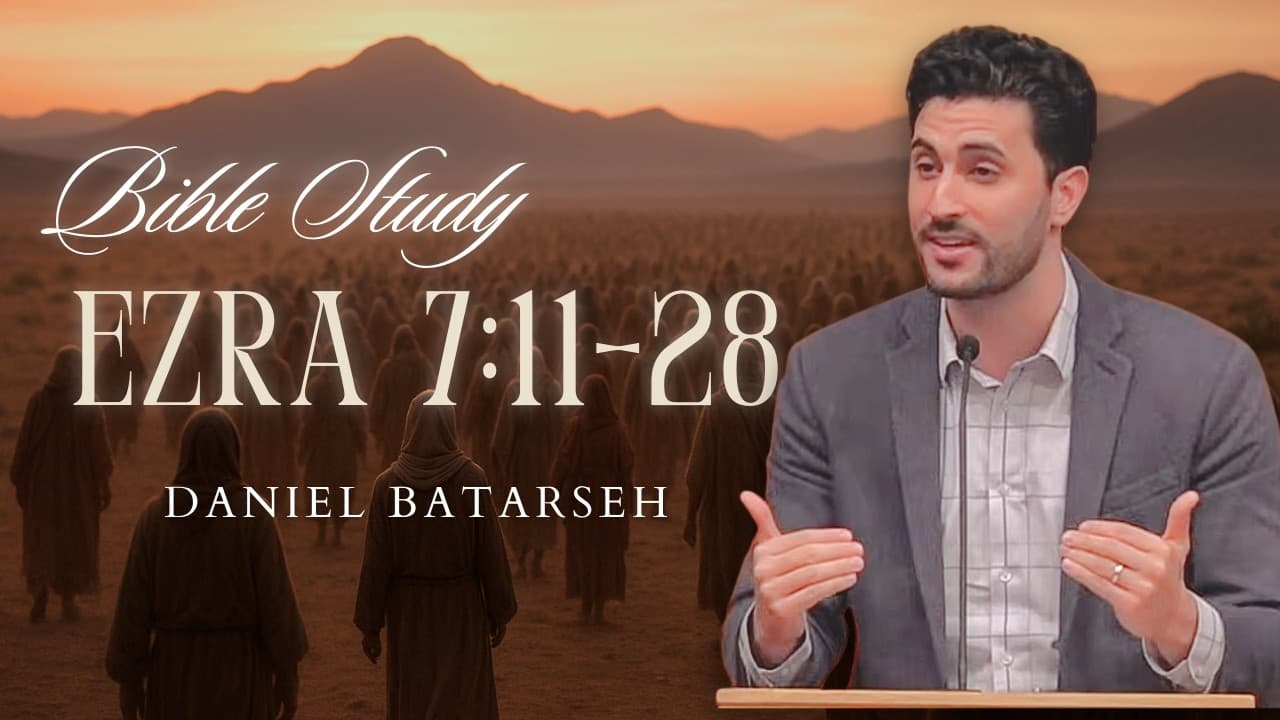
Is God waiting for you to move? In Ezra 7, we see a leader who didn't just wait for a miracle—he asked for one. Discover the heart of spiritual leadership and the shift from serving God out of fear to serving Him out of delight.
Most of us are taught that faith is a waiting game. We wait for the door to open, wait for the "still, small voice," or wait for God to move the hearts of the powerful. But as I sat in the room listening to Pastor Daniel Batarseh teach through the second half of Ezra 7, a different—and much more challenging—picture of faith emerged.
We often look at the return of the exiles to Jerusalem as a series of sovereign lightning bolts. God moved Cyrus; God moved Darius. But when we get to Ezra, the narrative shifts. Ezra didn’t just wait for King Artaxerxes to have a late-night epiphany. He went to the king with a plan.
This is the tension we often miss: There are moments when God paves the road before we even put on our shoes, and then there are moments when the road only appears after we take the first step. Pastor Daniel Batarseh highlighted this early on:
> "There are gonna be times where you and I have to wait on the Lord because there's nothing else you can do... and there are gonna be other times where God is actually waiting for you. And things will not take place unless you, understanding who God is and what he asks of you, step out in obedience." (watch this moment at 35:32)
In Ezra 7:11-28, we see what happens when a man of God stops waiting for permission and starts acting on conviction.
When God is Waiting on You: The Power of Bold Requests
If you skim Ezra 7:6, you might miss the engine behind this entire chapter. It says the king granted Ezra "all that he asked." This decree from Artaxerxes wasn't a random act of royal kindness; it was a response to a specific, bold, and scripture-informed request from Ezra.
Ezra had spent years in Babylonia studying the Law of Moses. He didn’t just have information; he had a vision. He saw that while the temple had been rebuilt under Zerubbabel, the people were still in disarray. He saw a gap between the physical structure in Jerusalem and the spiritual state of the inhabitants.
This is a vital lesson for us today. We often pray for God to "do something" in our families, our workplaces, or our city, while God is looking at us, waiting for us to present a request based on the promises we’ve been reading. Ezra’s faith wasn't passive. It was an "initiated" faith. He understood that God’s sovereignty doesn't cancel out human agency; it empowers it.
Building Souls, Not Just Stones: The Priority of a True Leader
One of the most striking insights Pastor Daniel shared was the distinction between the three great leaders of the return. Zerubbabel was called to build the Temple. Nehemiah was called to build the Walls. But Ezra? Ezra was called to build the People.
You can have a beautiful building and a secure perimeter, but if the people inside don't know the God they serve, you just have a well-guarded museum. Artaxerxes’ letter commissions Ezra to "make inquiries... according to the law of your God which is in your hand" (Ezra 7:14). Ezra’s primary mission was a spiritual audit. He wanted to see if the people were actually living out the truth they claimed to possess.
Pastor Daniel connected this to the heart of the Apostle Paul in Galatians 4:19, where Paul speaks of being in the "anguish of childbirth until Christ is formed in you." This is the mark of a real leader. It’s not about how many people show up or how big the budget is; it’s about the formation of Christ in the souls of the listeners.
This kind of leadership requires a difficult kind of love—the kind that tells the truth even when it hurts. Pastor Daniel didn't mince words here:
> "A person who manipulates, who massages, who avoids things that will benefit God's people in the name of a pseudo love, they don't really love you, they love themselves... They don't care about Christ being formed in you, they want you to benefit them." (hear Pastor Daniel explain this at 47:45)
Ezra loved the Jews in Jerusalem enough to go back and confront their compromise. He wasn't interested in being a popular figurehead; he was interested in their sanctification.
The "Insurance Policy" Trap: Serving Out of Dread vs. Delight
As we read the king's decree, we see an incredible amount of gold, silver, and resources being poured into the Jerusalem project. On the surface, Artaxerxes looks like a hero of the faith. But if you look closer at Ezra 7:23, his motivation is revealed: "Lest his wrath be against the realm of the king and his sons."
Artaxerxes wasn't serving God out of love. He was serving God out of fear. He viewed his contributions as an insurance policy. He thought, "This God of Israel seems powerful, so I’ll pay my premiums to keep Him off my back."
Pastor Daniel warned that many Christians live in this same "Artaxerxes mode." They give, they serve, and they attend church not because they are captivated by the beauty of Christ, but because they are terrified of the "red button" of judgment. They live in a state of constant spiritual trepidation.
To counter this, we looked at King David’s prayer in 1 Chronicles 29:10-17. David’s giving was extravagant, but it wasn't motivated by fear. It was motivated by the realization that everything he had belonged to God anyway. David gave out of overflow, not out of obligation.
This is where the Gospel becomes the only engine that can sustain a Christian life. In John 8:11, Jesus tells the woman caught in adultery, "Neither do I condemn you; go, and from now on sin no more." The order is everything. The "no condemnation" comes before the command to "sin no more."
If you try to reverse that order, you end up like Artaxerxes—miserable, anxious, and trying to buy off God’s anger. Pastor Daniel’s challenge was direct:
> "The misery that you're managing is not the will of God. That is not Christianity... We love because he first loved us." (watch at 1:02:38)
The Scribe Who Sings: Why Information Must Lead to Adoration
One of the most beautiful moments in the text occurs in Ezra 7:27. After recording the king's long, formal letter, Ezra suddenly switches to the first person. He can’t help himself. He breaks out into a doxology: "Blessed be the Lord, the God of our fathers..."
This is the "Scribe who sings." Ezra was a scholar. He was a man of the book. He spent decades in the dusty scrolls of the Pentateuch. But his study didn't make him cold or academic; it made him a worshiper.
Pastor Daniel pointed out that you can tell the Word of God is truly working in someone when it leads them to worship. If your Bible study only leads to more arguments, more debates, or a bigger head, you’re doing it wrong. True theology always ends in a "Blessed be the Lord."
> "One of the ways you know the word of God is working in you is that it will lead you to worship. I know some people who have an incredible handling of the scriptures, but they're not worshipers... Ezra, he spent years looking into the word of God and the first thing that we see about him when he starts speaking is praise." (hear this moment at 1:11:50)
The Will of God for Your Wallet
Finally, we touched on a practical point of discipleship that most people avoid: the relationship between our faith and our finances. In Ezra 7:18, the king tells Ezra that he can do whatever seems good with the surplus of the silver and gold, provided it is "according to the will of your God."
Even in the handling of "extra" money, Ezra was bound by the will of God. Pastor Daniel encouraged us to invite God into our bank accounts. This isn't about legalistic tithing; it’s about a heart that says, "Lord, this is all Yours anyway. What would You have me do with it?"
He suggested a simple practice: Regularly tell the Lord in prayer that everything you own belongs to Him. Your house, your car, your savings—it’s all His. This simple act of confession breaks the grip of materialism and opens the door for "holy joy" in an area that is usually a source of stress.
What to Remember
- Faith is often an initiative, not just a waiting room. Like Ezra, we are called to make bold, scripture-informed requests of God and the authorities He has placed over us.
- Spiritual leadership is about the formation of Christ, not the building of an empire. If a leader doesn't care about your soul's growth, they don't truly love you.
- Obedience fueled by fear is an insurance policy; obedience fueled by grace is worship. We serve God because we are already forgiven, not to earn a reprieve from His wrath.
- Theology must lead to Doxology. If your study of the Bible doesn't make you more of a worshiper, you've missed the heart of the Author.
- God can move the heart of a pagan king, so He can certainly move yours. If Artaxerxes could be moved to support God's work, there is no heart too hard for the Holy Spirit to realign.
Questions to Sit With
- Are you currently waiting for God to move in a situation where He might actually be waiting for you to take a bold step of faith?
- When you serve or give, are you doing it as an "insurance policy" to avoid God's anger, or as a response to His "no condemnation" promise?
- If you were to honestly assess your spiritual growth, would you say Christ is being formed in you, or have you reached a standstill?
- What would change in your stress levels if you genuinely surrendered your finances to the "will of God" rather than your own security?
- Does your knowledge of the Bible lead you to argue more or worship more?
Scripture Referenced
- Ezra 7:11-28
- Colossians 2:6-10
- Galatians 4:16-19
- 1 Chronicles 29:10-17
- John 8:11
- 2 Thessalonians 3:5
- Jude 1:24-25
This article is drawn from the sermon "Ezra 7 (Part 2) Bible Study (Ezra Sent to Teach the People) | Pastor Daniel Batarseh (2/13/26)" by Pastor Daniel Batarseh at Maranatha Bible Church Chicago. Watch the full sermon →
Based on the sermon