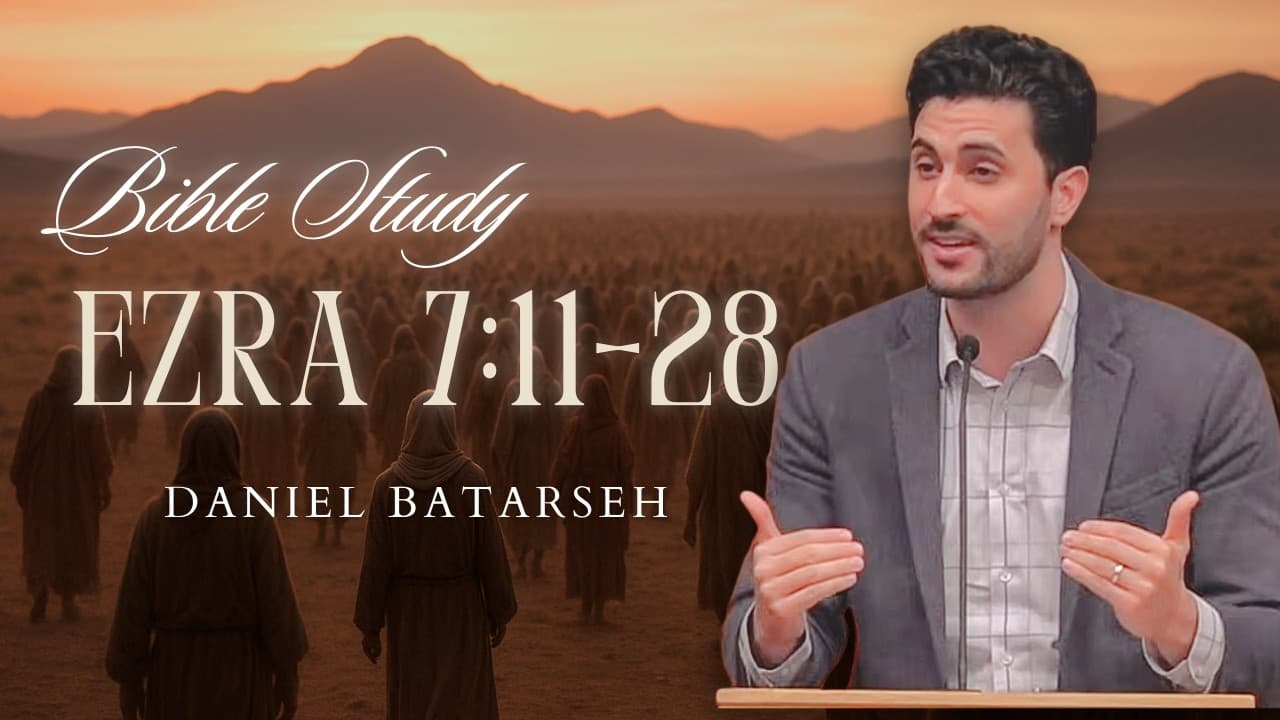
Artaxerxes bankrolled God's temple as an insurance policy against divine wrath. David gave extravagantly out of sheer delight. Ezra 7 forces the question: which giver are you?
There are two ways to serve the living God. One will drain you dry. The other will set your soul ablaze.
In Ezra chapter 7, a pagan king named Artaxerxes writes a letter of astonishing generosity on behalf of Ezra and the people of God. He bankrolls their sacrifices, backs their mission, and threatens punishment on anyone who disobeys God's law. On paper, it looks like devotion. But read the fine print in verse 23 and you find his real engine: "lest his wrath be against the realm of the king and his sons." Artaxerxes was not worshiping. He was hedging his bets. And there are far more Christians living under that same posture than any of us would care to admit.
The Man Who Refused to Wait for a Sign
Before the devastating contrast that cracks this passage open, we must understand what makes Artaxerxes' decree different from every other royal edict in the book of Ezra. Cyrus decreed the return from exile. Darius confirmed the temple rebuilding. Both were initiated by God moving directly, sovereignly, in the heart of a pagan ruler -- unprompted, unilateral, requiring nothing from any human being. But Artaxerxes' letter? It was a response.
Verse 6 spells it out: "The king granted him all that he asked, for the hand of the Lord his God was on him." Ezra approached the king. Ezra made the request. Ezra had the audacity to walk into the court of the most powerful man in the known world and say, in effect, "I need to go check on God's people."
This distinction ought to rattle every believer who has been sitting in comfortable paralysis waiting for divine confirmation to do what the Scriptures have already made plain. As Pastor Daniel Batarseh put it with striking directness: "There are gonna be times where you and I have to wait on the Lord because there's nothing else you can do... And there are gonna be other times where God is actually waiting for you. And things will not take place unless you, understanding who God is and what he asks of you, step out in obedience" (hear this moment).
Ezra did not sit in Babylon wringing his hands, hoping for a prophetic word to tumble from the sky. He had studied the Scriptures. He knew what God desired for his people. And from that knowledge, he acted. He walked toward the throne. The result was not Ezra's achievement but God's honor poured out on a man who dared to move first. Some of us are stuck -- not because God has not spoken, but because we have not stepped.
The Ache That Marks a True Shepherd
When Artaxerxes granted Ezra's request, the first item on the agenda was not construction, not logistics, not treasury allocations. It was this, in verse 14: "Go and inquire... according to the law of your God which is in your hand." Ezra's burning concern was the spiritual condition of the remnant who had preceded him to Jerusalem. Were they still walking with God? Were they still living by the standard of his revealed will?
Zerubbabel was called to rebuild the temple. Nehemiah would be called to rebuild the walls. But Ezra -- the man in the middle -- his mission was to build the people. And that tells you everything you need to know about what real spiritual leadership looks like. A true leader does not merely pursue personal godliness as a private hobby. He carries a bone-deep ache for the growth of those in his care.
The Galatians parallel makes this visceral. Paul writes to a church that had traded the gospel for legalism, and his language is almost violent in its tenderness: "My little children, for whom I am again in the anguish of childbirth until Christ is formed in you" (Galatians 4:19). Think about that metaphor. Paul reaches for the most painful physical experience available to describe his inner state. And what triggered this agony? The Galatians were not growing. The formation of Christ's character in them had ground to a halt.
As the teaching made vivid: "I saw you come to Christ. And it's as though he's saying, through my preaching, my ministry, you were born again. And I wanna let you know something. When you were born again, something was born in me -- a love and a care for you as a father would cherish their own offspring" (watch at 43:55).
And then comes the uncomfortable edge. Paul asks the Galatians in verse 16: "Have I then become your enemy by telling you the truth?" They had mistaken confrontation for cruelty. But any parent who truly loves a child will prescribe what is beneficial even when the child's flesh recoils from it. False teachers, by contrast, massage and manipulate and carefully avoid anything that might cost them their audience. "A person who manipulates, who massages, who avoids things that will benefit God's people in the name of a pseudo love -- they don't really love you, they love themselves" (hear this moment).
How do you know if a spiritual leader genuinely cares about your soul? Watch what they do with the truth. Sinners can spend time with you. Sinners can answer the phone at two in the morning. But sinners do not care about Christ being formed in you.
The Insurance Policy vs. the Love Letter
Here is where the sermon reached its deepest nerve. Artaxerxes gave generously -- a hundred talents of silver, a hundred cors of wheat, a hundred baths of wine and oil, salt without limit. He even told Ezra to spend the surplus "according to the will of your God" (v. 18). Impressive. But why? The final clause of verse 23 strips away the veneer: "lest his wrath be against the realm of the king and his sons."
This was not worship. It was a transaction. Artaxerxes viewed Yahweh as powerful enough to appease, dangerous enough to respect -- but not glorious enough to love. His offering was an insurance premium, nothing more.
Now set that beside David in 1 Chronicles 29. David pours out three thousand talents of gold, seven thousand talents of refined silver, and then erupts into one of the most magnificent prayers in all of Scripture: "Yours, O Lord, is the greatness and the power and the glory and the victory and the majesty, for all that is in the heavens and in the earth is yours" (watch at 1:00:09). David gave not to avert catastrophe but because he recognized that everything he had -- every coin, every talent, every acre -- came from God's hand in the first place. Verse 17: "In the uprightness of my heart, I have freely offered all these things." Freely. Not fearfully. Not reluctantly. Freely.
The teaching pressed this contrast directly into the conscience: "There are a lot of professing Christians who serve, who give, who abstain with similar thinking. They do what they do for God because they fear they will be punished by God if they don't. And that's all that gets them going. That's all that keeps them" (watch at 58:16).
You can live your entire Christian life checking boxes, attending services, and tithing -- and never once taste the joy of actually knowing the God you claim to serve. The misery you are managing is not Christianity. It is a counterfeit wearing Christian clothes, and it will never satisfy.
"Neither Do I Condemn You" -- The Order Changes Everything
So what is the remedy? Not "try harder to love God." That counsel is true but toothless if it begins in the wrong place. The remedy is to see first -- to see what God has already done.
Consider John 8:11. Everyone remembers Jesus saying to the woman caught in adultery, "Go and sin no more." Far fewer remember what he said first: "Neither do I condemn you." The order matters. The revelation of grace preceded the call to holiness. Christ -- the only person in that mob who was sinless, the only one actually authorized to pick up a stone -- chose mercy. And from the solid ground of that mercy, he issued the command to walk differently.
This is the engine of the Christian life. We love because he first loved us. We do not labor ourselves into God's approval; we labor from a standing already approved. "You and I will never know the joy and delight that Christ wants us to have in our walk with him if anxiety about judgment is the grounds of your godliness" (watch at 1:01:57).
If you have been living under the constant dread that God is about to press the button on your life -- that one misstep will unleash disaster -- you have been believing a lie about the character of God. Is there a place for holy fear? Yes. But holy fear is the reverent awe of a child who knows the strength and goodness of his father. It is not the cowering of a prisoner bracing for the next blow.
And here is the hope that ought to break through every wall you have built around your heart. 2 Thessalonians 3:5: Paul prays, "May the Lord direct your hearts to the love of God and to the steadfastness of Christ." God himself is willing to maneuver your heart, mold it, clean it, and set it more firmly on his love and Christ's faithfulness. If he placed reverence for his name into the heart of a pagan king who did not even truly know him, how much more will he reshape the heart of someone who actually longs for holiness? He will not give you a stone when you ask for bread. He will not give you a scorpion when you ask for a fish. And if you want more of the Holy Spirit, he is going to give you more of the Holy Spirit.
The Scholar Who Opened His Mouth and Sang
The chapter closes with Ezra speaking in the first person for the first time in the entire book that bears his name. And what comes out? "Blessed be the Lord, the God of our fathers, who put such a thing as this into the heart of the king" (v. 27).
This man initiated the request. He did the work of studying, preparing, traveling. He had every human reason to take credit. And yet his first recorded words are not a logistics report or a strategic plan. They are worship. Raw, God-exalting, credit-deflecting praise.
Here is the litmus test for whether the word of God is doing its work in you. Ezra spent years immersed in the Scriptures -- studying them, obeying them, teaching them. And the fruit? Adoration. Not arrogance. Not a swollen head packed with information and primed for debate. Tenderness. Excitement. Song. If your Bible study is producing arguments but not awe, information but not adoration, something has gone fundamentally wrong.
As the closing exhortation urged, if you struggle to believe God truly loves you, start by finding the verses that declare his love, his grace, his humility toward his people -- and memorize them. Tuck them into your heart. Build a defense mechanism in your mind so that when the invading thoughts of condemnation come crashing in, they are met and shot down by truths you have stored. As Jude 1:24-25 proclaims: "Now to him who is able to keep you from stumbling, to present you blameless in the presence of his glory with great joy." Blameless. With great joy. That is your future. Let it reshape your present.
What to Remember
- There are seasons where God opens the door and seasons where he waits for you to knock -- Ezra models the faith-driven initiative that unlocks the second kind.
- The mark of a true spiritual leader is not availability or popularity but an ache for Christ to be formed in those they serve -- and the courage to speak hard truths to get there.
- Giving, serving, and obeying out of fear that God will punish you is not worship; it is an insurance policy, and it will leave you hollowed out.
- Jesus told the woman caught in adultery "neither do I condemn you" before "go and sin no more" -- the order reveals the engine of all genuine holiness.
- If God placed reverence for his name in the heart of a pagan king, he is more than willing to direct your heart toward his love and the steadfastness of Christ. Ask him.
- Scripture rightly received always produces worship -- if your study makes you argumentative but not adoring, the word has not yet reached your heart.
Questions to Sit With
- Is there a step of faith -- a bold request, an uncomfortable act of obedience -- where God has been waiting for you to move rather than waiting for a sign?
- When you give your time, money, and energy to God, is the underlying motivation closer to Artaxerxes' insurance policy or David's overflowing gratitude?
- If a leader in your life confronted you with a hard truth, would your first instinct be to receive it as love or reject it as attack?
- What would actually change in your daily life if you believed -- not theoretically but in your bones -- that God was more eager to bless you than to punish you?
- What verse about God's love could you memorize this week to build a wall against the lie that he is perpetually disappointed in you?
Scripture Referenced
- Ezra 7:11-28 (primary passage)
- Colossians 2:6-10
- Galatians 4:16-19
- 1 Chronicles 29:10-17
- John 8:11
- 2 Thessalonians 3:5
- Jude 1:24-25
This article is drawn from the sermon "Ezra 7 (Part 2) Bible Study (Ezra Sent to Teach the People)" by Pastor Daniel Batarseh at Maranatha Bible Church Chicago. Watch the full sermon →
Preached by
Pastor Daniel BatarsehSenior Pastor
This summary was generated by AI from the sermon transcript.

Based on the sermon